








I never imagined history would come for me like this.
On the morning of October 7, I was in my Giv’atayim apartment with my dog, Kona. I wasn’t in uniform. I wasn’t near the border. But I was wide awake, just back from the dog park, live-reporting what I could as hundreds of Red Alert sirens screamed across the country and images of slaughter began pouring in just kilometers from my door.
Entire communities were overrun. Families were burned alive. Civilians were dragged into Gaza. It was the deadliest day for Jews since the Holocaust.
I thought the world would see what I saw. I thought the evidence would be undeniable. After all, Hamas live-streamed it, recorded calls to families of victims, and forced them to listen to their loved ones slaughtered.
But what followed wasn’t global outrage. It was spin. It was protests in the street against Israel even before Israel had responded militarily.
Hamas, a terror group that documented its own atrocities, somehow managed to shape the global narrative. Journalists and UN organizations doubted Jewish testimonies of rape and torture on October 7 but were quick to repeat Hamas’s unverified claims about hospitals, famines, and massacres. The aggressor became the victim, and Israel was cast as the villain in its own slaughter and kidnapping.
Then came silence. And, after that came the justifications.
As of this writing, 641 days have passed. Over 50 hostages remain underground. In April, Iran launched one of the largest direct ballistic attacks in modern history with over 300 drones and missiles. Our skies lit up again. Our shelters filled again.
Still, no protests. No mass condemnations. No “Never Again” rallies.
I’ve now lived through two wars in less than two years and watched much of the world look away or worse, try to stop Israel from defeating a genocidal terror group and retrieving our people trapped underground, starving and being tortured.
So the question I keep returning to, regardless of the mechanism that causes it, is this:
Can antisemitism truly be defeated, or is the real fight about surviving it?
The Psychology Behind the Hate
Most people assume antisemitism comes from ignorance. That if we educate, explain, and appeal to people’s morality, things will improve.
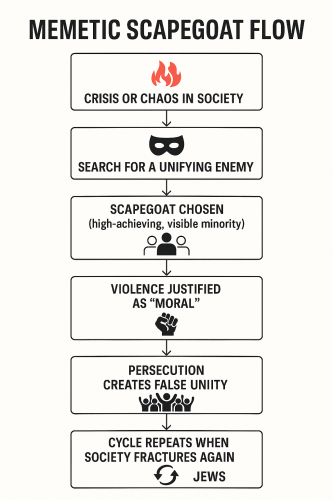
But that assumption ignores something deeper. Antisemitism is not merely a misunderstanding. It’s a pattern of behavior rooted in how human groups manage internal crisis.
Genocide?
Apartheid?
Ethnic Cleansing?
Colonization?
All lies. Sold as truths.
And they’re terrifyingly effective as we saw in Nazi Germany.
What Doesn’t Work and What Might
Here’s the painful truth: our traditional responses no longer land.
• Education fails when people are emotionally invested in the lie.
• Moral appeals fall flat when the listener already believes you’re evil or inhuman.
• Victimhood doesn’t earn compassion when people think you deserve your fate.
So what can we do? We need to stop playing defense and start thinking strategically. If antisemitism is a human pattern, it can’t be erased. But we can try to disrupt it.
1. Reclaim Power
We must stop leading with trauma and start leading with strength. Jewish people are not only survivors. We are builders, warriors, and visionaries.
Just look at what we’ve built in 77 years, from ashes to innovation, from exile to sovereignty. We should project confidence, capability, and pride in our heritage and never apologize for our existence.
But, we as individuals must also learn how to protect ourselves from physical attack. I’ve seen too many videos of Jews being assaulted with no idea how to respond. If we don’t want to be victims, we have to learn self-defense.
2. Control the Narrative Battlefield
Disinformation spreads faster than facts. That’s the reality. So we must:
• Pre-bunk propaganda before it lands
• Highlight Hamas’s own public statements and genocidal charter
• Use emotionally resonant visual storytelling and not just dry facts
• Speak to values, not just statistics
3. Build Parallel Infrastructure
We cannot rely on institutions that have already failed us. We need:
• Independent Jewish media platforms
• Global legal watchdogs with real bite
• Cross-cultural coalitions with allies of like minds
• Security systems that don’t wait for permission to act (neighborhood watches, etc.)
4. Strengthen Jewish Identity
The antidote to shame isn’t explanation. It’s belonging.
We need to raise a generation that knows who they are, where they come from, and why it matters. A generation that won’t flinch when falsely accused. A generation whose pride runs deeper than public opinion. A generation that doesn’t have a galut mentality and knows how to fight back. Jews are uniquely vulnerable to this. We’re generally successful as a people, but numerically infinitesimal. We’re disproportionately visible in global fields from medicine to media, but make up less than 0.2% of the world population and have won approximately 20% of all Nobel Prizes. We have a homeland now, but many still see us as foreigners. And we’ve survived every empire that tried to erase our connection to this land and snuff out our existence.
That visibility, difference, and resilience provoke admiration in some and, unfortunately, resentment in others.
So when the world feels unstable, Jews become the pressure valve. Jews have become the canary in the coal mine for societies. And history shows us:
The more chaotic things get, the more dangerous it becomes to be Jewish.
Blood Libel 2.0
What happened after October 7 wasn’t just denial. It was something more ancient.
The blood libel, the myth that Jews kill children for ritual purposes, was one of the most persistent and deadly lies in European history. Today’s version is less medieval, but no less vicious.
Now, we’re accused of genocide, by those actively committing one.
Hamas’s brutality was not only real, it was documented. Yet within days, major media platforms began repeating Hamas’s narratives. The visuals of burned babies were dismissed as Israeli propaganda. The rapes were questioned or ignored. The beheaded civilians? A moral footnote.
In their place came a flood of disinformation: fabricated casualty counts, false accusations, and viral claims without verification. NGOs and human rights bodies that should have been truth arbiters instead became megaphones for terror-aligned talking points.
This is how modern blood libels work. They don’t spread because they’re proven. They spread because they feel true to people already primed to hate Jews. They offer moral clarity, scapegoats, and catharsis.
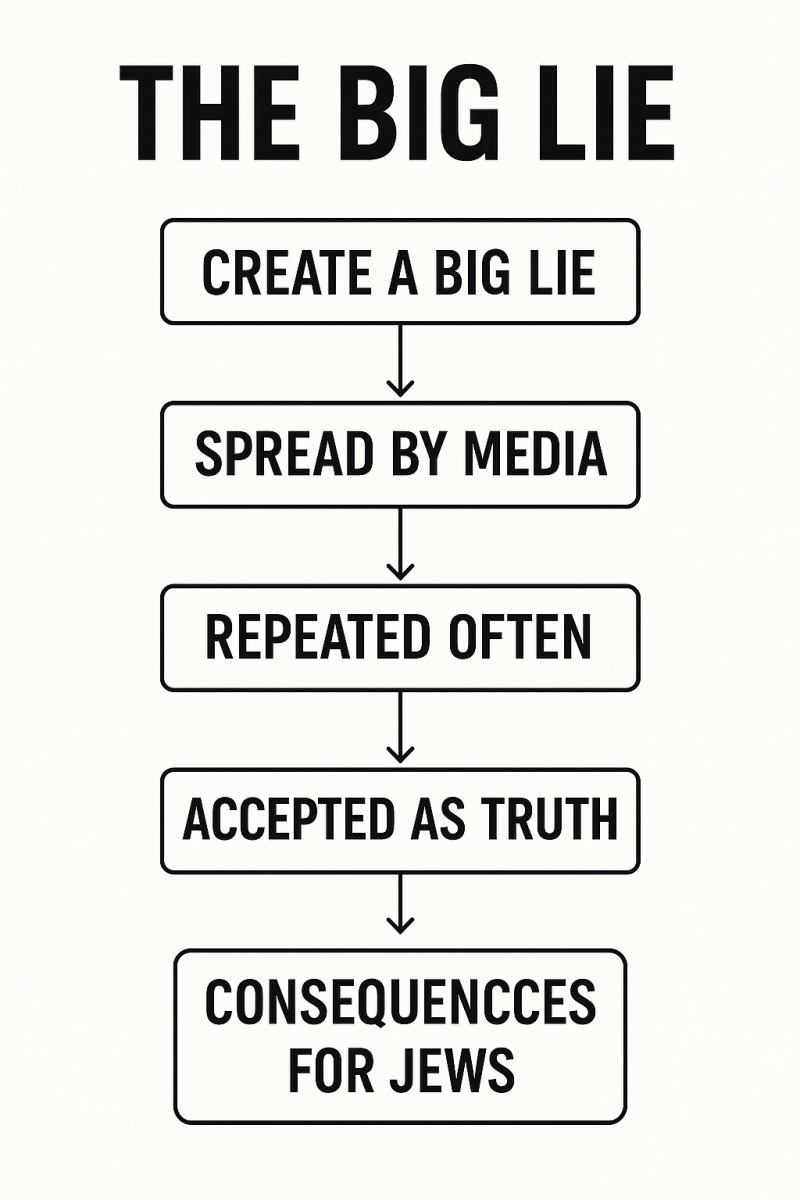
They’ve basically used the Goebbels technique of “The Big Lie.” It works like this: tell the lie enough, and people will eventually accept it as truth.
Why We Still Fight
I’ve lost a part of me in this war. I’ve lost faith in institutions I once believed in. But there is one thing I never lost faith in:
My people’s ability to overcome this.
We don’t fight antisemitism because we expect it to vanish. We fight because we refuse to kneel before it, or be destroyed by it ever again.
Even when they lie about us – we tell the truth.
Even when they rejoice in our pain – we remain in hope.
Even when they chant for our death – we celebrate life.
Am Yisrael Chai isn’t just a phrase. It’s a decision. It’s an ancient call.
From the waters of the Kinneret to the rolling Judean Hills. From Jerusalem to Masada, our ancestors call to us.
They remind us to maintain a defiant kind of hope that has sustained us for thousands of years.
“Never Again” was not a virtue-signaling slogan.
It was meant as a warning.
And now, this generation of Israelis, Jew and Arab alike, will turn that warning into a sacred vow.
A vow backed by strength, memory, and fire.
AM ISRAEL CHAI
By Maccabi Lev Ari
About the Author
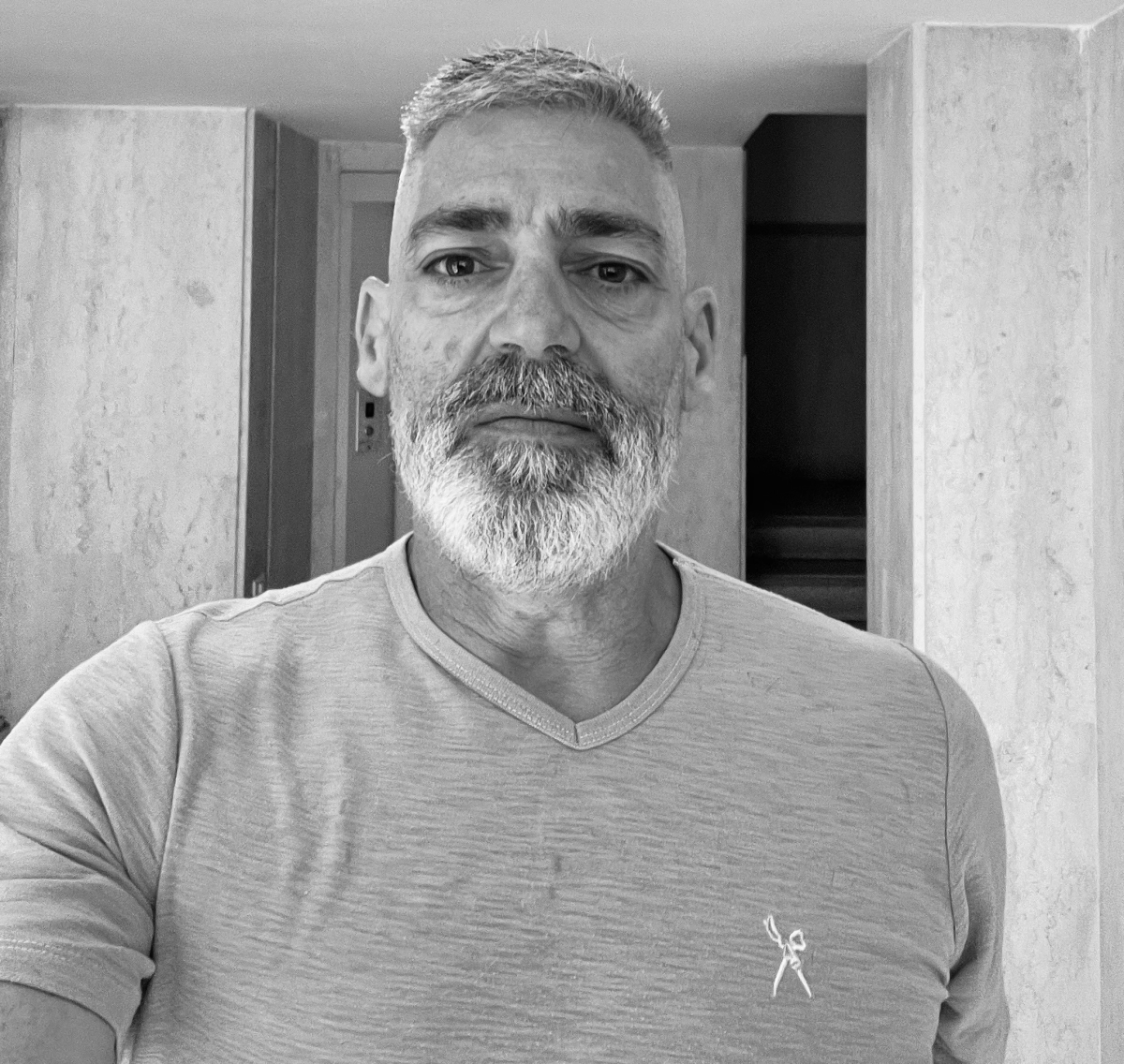
Maccabi Lev Ari is an American-born Israeli SportsMassage therapist, endurance athlete, and pro-Israel advocate based in Giv’atayim. He Lived through the October 7th War in Israel and now speaks and writes about Jewish resilience, identity, and strength in the face of modern antisemitism.