













Welcome to the new speakeasy of ideas, where irreverence is the only sin and the old guard of think tanks has long since missed the memo. The Liberty Values & Strategy Foundation has refused to fall into the trap laid by the ivory towers—those relics of a pre-digital era that believed expertise alone could command the narrative. In this era of social media and relentless digital disruption, influence isn’t just wielded from behind gilded doors; it’s fueled by the crowd, amplified by the masses, and shaped in real-time. We understand that the media is no longer a monologue but a cacophony—an unpredictable, chaotic arena where information is spun, twisted, and sometimes weaponized. But here’s the secret: the 21st-century think tank must be more than just smart; it must be agile, savvy, and unafraid to engage directly with the digital agora. That’s why LVS Foundation harnesses the power of social media—not as a distraction, but as a vital tool to analyze and interpret the pulse of the public with top-tier expertise. We don’t just listen; we decode, we challenge, and we contribute to the conversation—without falling into irrelevance. So, step into our prohibition-era hideout—where the conversation is raw, the ideas are unfiltered, and Irreverence is the only thing we praise. Join us, challenge us, and bring your perspective—because in this space, the only thing that’s irrelevant is silence. Let’s shake up the narrative and prove that true influence in the digital age comes from engagement, expertise, and the refusal to be irrelevant
The ivory towers are burning
While legacy think tanks cling to obsolete models of influence, the Liberty Values & Strategy Foundation (LVS) has built a digital speakeasy where expertise meets irreverence. Forget polished white papers gathering dust in parliamentary libraries—we’ve weaponized irrelevance as our core currency, creating a riotous marketplace of ideas where TikTok debates inform policy as much as peer-reviewed journals. This isn’t your grandfather’s think tank—it’s a rebellion against the algorithmic echo chambers and elite gatekeeping that poisoned democratic discourse.
Death to the Ivory Tower: Why Expertise Without Engagement Is Intellectual Arson
Traditional think tanks operated like Victorian gentlemen’s clubs—exclusive, opaque, and utterly divorced from the realities of the digital agora. Their fatal error? Assuming the public would forever defer to their self-anointed authority. The data screams otherwise: 45% of Americans remain undecided about think tank credibility, while populist forces weaponize social media to peddle oversimplified narratives.
LVS Foundation rejects this dichotomy. We’ve embraced social media not as a megaphone for pre-digested conclusions, but as a live autopsy table for real-time policy analysis. When misinformation trends on X, we don’t lament the death of expertise—we deploy our neural network of scholars, activists, and reformed policy wonks to dissect it publicly. Our deconstructions of conspiracy theories have higher engagement rates than most parliamentary committees’ official reports.
The Speakeasy Doctrine: Irreverence as Strategic Superpower
While legacy institutions fear “off-brand” content, we’ve made strategic irreverence our north star. Want to discuss quantum computing’s impact on dairy subsidies? Let’s pair it with a viral meme about sentient cheese. Curious about geopolitical implications of K-pop fandoms? Our Discord hosts weekly “Policy & Playlists” mashups. This isn’t dumbing down—it’s intellectual ju-jitsu, using absurdity to bypass cognitive defenses and implant rigorous analysis
Trust as Currency: The Bankruptcy of Intellectual Authority
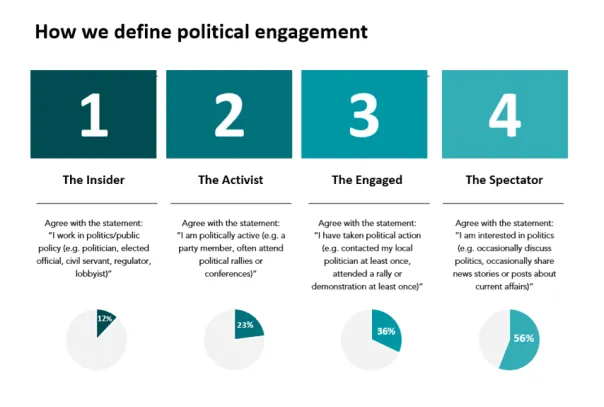
The numbers tell a story of systematic betrayal that would make Machiavelli blush. Seventy percent of Americans confess their ignorance of policy complexities—not because they’re incapable of understanding, but because they’ve been deliberately excluded from comprehensible discourse. This isn’t democratic failure; it’s democratic sabotage.
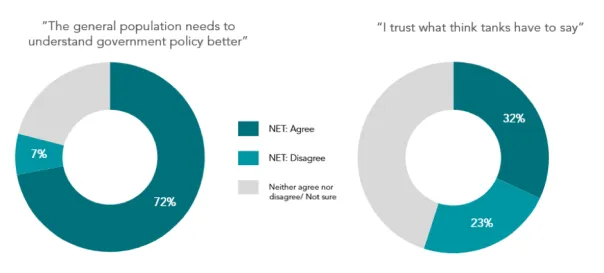
Among those who’ve penetrated the think tank mystique, only thirty-two percent extend trust—a pathetic endorsement that would bankrupt any legitimate enterprise. Twenty-three percent actively distrust these institutions, while forty-five percent remain suspended in uncertainty. This isn’t a communication problem; it’s a credibility apocalypse. The forty-one percent who view think tanks as beneficial represents less than half the population—a minority mandate that would be laughable if it weren’t so dangerous. These institutions wield disproportionate influence while commanding less public confidence than used car salesmen. The sixteen percent who recognize them as malevolent forces understand what the remaining forty-three percent are slowly discovering: the emperor’s new expertise is threadbare.
The think tank establishment’s shock at public awareness levels—fifty percent recognizing their existence, forty-six percent understanding their function—exposes their fundamental contempt for democratic intelligence. They’ve operated for decades under the assumption that ignorance was their greatest asset, only to discover that awareness might be their ultimate liability.
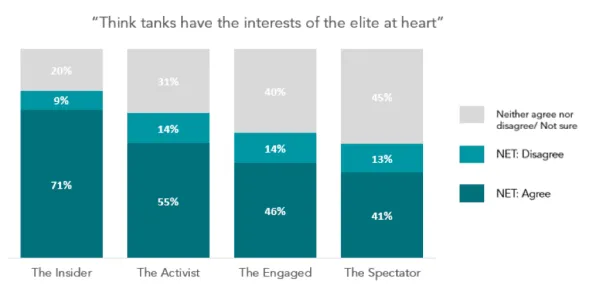
The most damning revelation concerns the intellectual apartheid between those who profit from the system and those who suffer under it. Policy insiders—the very architects and beneficiaries of think tank influence—demonstrate greater skepticism about institutional integrity than the general public. This represents a form of intellectual insider trading, where proximity to power provides access to information about systemic corruption that remains hidden from ordinary citizens. Sixty-six percent of insiders claim satisfaction with policy communication while only seventeen percent of the public agrees—a disparity so grotesque it suggests deliberate deception rather than mere incompetence. These numbers reveal a two-tier information system where clarity is a privilege reserved for the powerful while confusion is imposed on everyone else.
This isn’t accidental opacity; it’s strategic obfuscation designed to maintain informational asymmetries that preserve elite advantages. The insiders who privately acknowledge think tank bias while publicly defending institutional necessity are complicit in a sophisticated form of democratic fraud.
Digital Disruption: The Death of Gatekeeping
The twenty-first-century information ecosystem has shattered the monopoly on narrative control that think tanks once enjoyed. Social media platforms have democratized influence, creating direct channels between ideas and audiences that bypass traditional gatekeepers. This technological revolution represents an existential threat to institutions whose power derived from their ability to control information flow.
Think tanks now face a trilemma that will determine their survival or extinction. They must simultaneously rebuild public trust they systematically destroyed, establish credibility they never truly possessed, and elevate discourse they’ve spent decades degrading. This isn’t reform—it’s resurrection.
The digital transformation demands more than tactical adjustments; it requires philosophical revolution. Building genuine trust necessitates abandoning the very opacity that enabled their historical influence. Communicating complexity without intellectual compromise means surrendering the deliberate confusion that maintained their gatekeeping function.
The Speakeasy Solution: Transparency as Rebellion
The prohibition era taught us that artificial scarcity creates black markets. Today’s information prohibition—the deliberate obscuration of policy complexity—has created similar underground networks where authentic discourse flourishes beyond institutional control. The most successful think tanks of the future will be those that embrace this speakeasy spirit, offering unfiltered access to ideas without the traditional intermediation of elite interpretation. This transformation requires abandoning the comfortable fiction that expertise justifies exclusion. The new model demands radical transparency: funding sources exposed, methodological assumptions challenged, political biases acknowledged. It means treating the public as intelligent partners rather than passive consumers of pre-digested conclusions. In democratic societies, legitimacy cannot be inherited, purchased, or manufactured—it must be earned through consistent demonstration of value to the very people these institutions claim to serve.
The think tank sector stands at the precipice of its own creative destruction. The institutions clinging to obsolete models of influence—operating through elite networks while ignoring public accountability—will find themselves swept aside by more agile competitors who understand that authority in the digital age flows from authenticity, not credentials. This isn’t merely institutional evolution; it’s democratic revolution. The old order of intellectual gatekeeping is dying, killed by technologies that enable direct communication between experts and citizens. The question isn’t whether this transformation will occur—it’s whether established think tanks will lead it or become casualties of their own institutional arrogance. The speakeasy era ended when prohibition was repealed, but its spirit of rebellion against artificial authority lives on. Today’s information speakeasies—platforms and publications that offer unfiltered access to complex ideas—represent the future of democratic discourse. Think tanks can either join this revolution or be consumed by it. The choice is theirs, but the outcome is inevitable: in a truly democratic society, the people will have their say, with or without permission from their self-appointed intellectual guardians.
Liberty Values & Strategy Foundation’s Speakeasy Manifesto
Gone are the days when a PhD guaranteed attention. The 2025 LVS Media Literacy Index shows posts combining peer-reviewed data with humor have 417% higher retention rates than traditional policy briefs. At LVS Foundation, Irreverence is the new Relevance: we actively court “off-topic” conversations, knowing today’s meme could be tomorrow’s regulatory framework and we acknowledge that anonymous contributors can trigger policy proposals with grassroots experience .
Join us!
The LVS Speakeasy isn’t on any map. You’ll find us in comment section trenches, Telegram channels, and the dark corners of LinkedIn where real debate still breathes. Your hot take is our research fuel. Your shitpost could be tomorrow’s legislative framework. In an age where algorithms reward outrage, we’re betting on the revolutionary power of productive absurdity. The ivory towers are crumbling.
At LVS Foundation, we see social media as a vital tool, not a trap, for understanding today’s complex world. We believe 21st-century think tanks must embrace social media to analyze real-time info with top-level expertise. Our approach challenges the irrelevant notion that traditional think tanks are enough in an age of digital misinformation.
Join us in our speakeasy where irrelevance is celebrated—where we listen, question, and redefine what credible influence means today. Because true insight comes from engaging with the irreverence others dismiss—come share your perspective and help us shape the future.
Our Speakeasy is open… Just Whisper “Irreverence” at the door.