














Origines, histoire, situation actuelle et relations avec Israël
L’étude de la communauté juive en République démocratique du Congo (RDC) offre un prisme analytique unique sur les dynamiques culturelles, économiques et géopolitiques africaines, de la période coloniale jusqu’à l’ère contemporaine. Je propose ici une synthèse des origines, du parcours historique, de la situation actuelle et de la position politique des Juifs dans la RDC, en m’appuyant exclusivement sur la littérature académique et scientifique la plus rigoureuse disponible. Les relations avec Israël, tant avant qu’après l’indépendance ainsi que l’évolution diplomatique sous la présidence de Félix Tshisekedi sont également abordées
Les origines et la construction communautaire (1907-1930)
L’immigration juive en RDC peut être tracée précisément à partir de 1907, lorsque les premiers immigrants juifs d’Europe de l’Est commencent à arriver dans le territoire qui deviendra plus tard le Congo belge (Wikipedia, 2013). Ces pionniers, principalement des Ashkénazes originaires de Roumanie et de Pologne, sont attirés par les opportunités économiques offertes par l’exploitation coloniale (Kohnert, 2024). L’analyse de Miccoli (2024) précise que cette première vague migratoire s’intensifie avec l’arrivée d’immigrants juifs d’Afrique du Sud, créant ainsi un noyau initial de familles juives dans la colonie.
L’année 1911 marque un tournant décisif avec l’arrivée des Juifs séfarades originaires de l’île de Rhodes, alors sous domination ottomane (Miccoli, 2024; Kohnert, 2024). Ces nouveaux arrivants, culturellement et linguistiquement distincts des Ashkénazes, apportent avec eux leur tradition judéo-espagnole et leurs réseaux commerciaux méditerranéens. La même année voit la fondation de la Communauté du Congo Belge et du Ruanda-Urundi, première structure organisationnelle formelle de la diaspora juive congolaise. Selon Kohnert (2024), la communauté juive se développe principalement dans trois centres urbains : Elisabethville (aujourd’hui Lubumbashi), siège de l’industrie minière du Katanga, Léopoldville (aujourd’hui Kinshasa), capitale administrative, et dans une moindre mesure Luluabourg (aujourd’hui Kananga) dans le Kasaï-Central. Cette répartition géographique reflète les opportunités économiques offertes par l’exploitation coloniale, particulièrement après l’ouverture des premières mines et la fondation d’Elisabethville en 1910 (Miccoli, 2024).
Les sources convergent pour estimer qu’à son apogée, la population juive atteint entre 2 500 et 3 000 individus (Kohnert, 2024), ce qui représente une communauté substantielle dans le contexte colonial africain. African Synagogues (2004) précise que cette population était répartie de manière inégale, avec environ 50% résidant à Lubumbashi, principal centre économique du sud du pays.
L’inauguration de la synagogue d’Elisabethville en 1930 constitue un jalon fondamental dans l’affirmation identitaire de la communauté (African Synagogues, 2004; Kohnert, 2024). Construite sur un site proéminent au centre-ville, près d’autres édifices religieux et civiques importants, cette synagogue témoigne de l’intégration sociale et de la prospérité économique des Juifs du Congo (African Synagogues, 2004). L’arrivée du rabbin Moïse Lévy en 1937 renforce considérablement la structure communautaire, celui-ci assumant le leadership religieux de l’ensemble du Congo et du Ruanda-Urundi (Kohnert, 2024; Bourla-Errera, 2000).
Histoire et trajectoires sous la colonisation belge (1930-1960)
L’analyse de Kohnert (2024) révèle que les Juifs occupent une position économique particulièrement stratégique dans l’économie coloniale. Nombreux sont ceux qui se voient confier des responsabilités d’agents commerciaux et parfois de conseillers auprès du roi Léopold II, participant ainsi directement à la genèse de l’entreprise coloniale. Baumann (2010), cité par Kohnert (2024), souligne que la plupart des Juifs sont impliqués dans le commerce itinérant, vendant des produits locaux, de l’artisanat, et des biens manufacturés au détail et en gros. Cette activité commerciale revêt une dimension sociale particulière : selon Baumann (2010), les marchands juifs contribuent à “l’émancipation” des populations autochtones en les introduisant aux produits manufacturés et en les transformant en consommateurs à part entière. Cette fonction d’intermédiaire commercial distingue les Juifs des autres colons européens et explique pourquoi, selon Kohnert (2024), “les Congolais n’ont jamais assimilé les Juifs aux Belges.”
Les recherches de Baumann (2010) documentent un phénomène remarquable : plusieurs Juifs qui avaient eu des enfants avec des femmes africaines dans les années 1920 et 1930 les ont reconnus, leur ont donné leur nom et ont financé leur éducation. Cette pratique, bien qu’exceptionnelle dans le contexte colonial de l’époque, témoigne d’une approche des relations interraciales distincte de celle des autres communautés européennes.
La Seconde Guerre mondiale constitue une période critique pour la communauté juive du Congo. Miccoli (2024) documente que certains Juifs séfarades de nationalité italienne sont internés, mais l’intervention diplomatique du rabbin Moïse Lévy auprès des autorités coloniales belges assure leur libération. Cette période révèle la capacité d’organisation et de négociation de la communauté face aux défis externes.
À la veille de l’indépendance en 1960, la communauté juive atteint son développement maximal. Wikipedia (2013) précise qu’à cette époque, le Congo abrite 2 500 Juifs, avec 50% de la population concentrée à Lubumbashi et 70 familles juives résidant dans la capitale Kinshasa. L’intégration éducative est remarquable : les enfants juifs bénéficient d’un enseignement en hébreu et en études judaïques dans les écoles publiques, témoignage de la reconnaissance officielle de la spécificité culturelle de cette minorité.
Déclin et exode post-indépendance (1960-1990)
L’accession à l’indépendance en 1960 marque le début d’un déclin inexorable de la communauté juive. Kohnert (2024) analyse que les troubles suivant la proclamation d’indépendance et la sécession du Katanga de Moïse Tshombé provoquent l’exode des Juifs d’Elisabethville, à l’instar de la plupart des Européens. Cette première vague d’émigration se dirige principalement vers l’Afrique du Sud, la Belgique et Israël.
La politique d’authenticité et de “zaïrianisation” initiée par Mobutu en 1973 constitue un tournant décisif. Cette campagne de nationalisation des entreprises étrangères frappe particulièrement les entrepreneurs juifs, contraignant la plupart à abandonner leurs activités commerciales (Kohnert, 2024). Les pillages de 1991 achèvent de convaincre les derniers entrepreneurs juifs de quitter définitivement le pays. Paradoxalement, bien que la communauté juive d’Elisabethville se disperse, celle de Léopoldville (Kinshasa) se développe après 1960, accueillant certains réfugiés internes (Kohnert, 2024). Cette redistribution géographique reflète les nouvelles réalités politiques et économiques du Congo indépendant, la capitale concentrant désormais les opportunités restantes.
Situation actuelle et leadership communautaire (1990-2025)
Selon les données du Congrès Juif mondial, la population juive actuelle de la RDC est estimée à environ 100 individus, principalement concentrés à Kinshasa avec quelques familles résiduelles à Lubumbashi. Cette réduction drastique de plus de 95% par rapport à l’apogée des années 1950 illustre l’ampleur de l’exode.
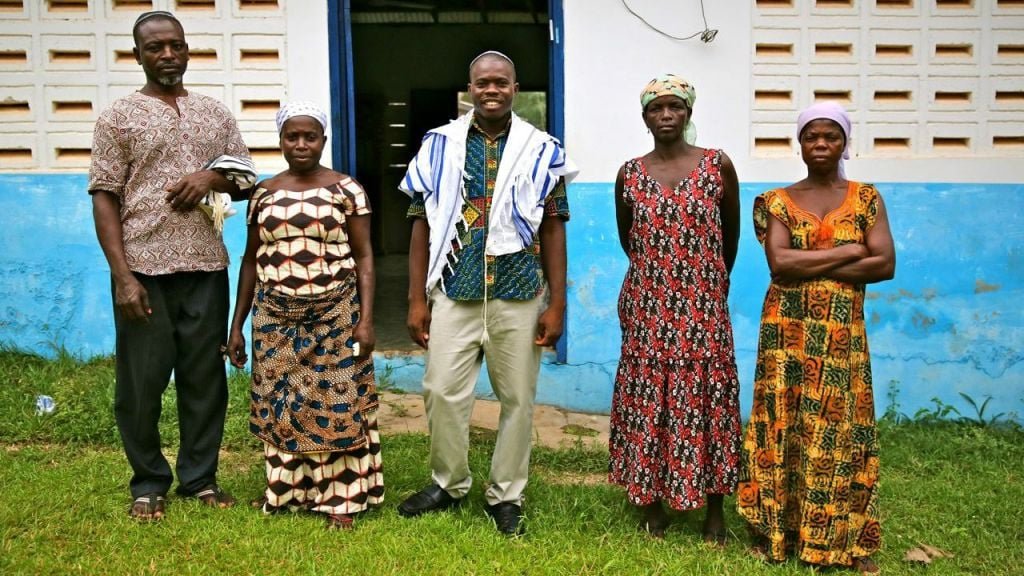
La synagogue de Lubumbashi, bien qu’ayant cessé de fonctionner en tant que lieu de culte actif, subsiste comme témoignage architectural de l’histoire juive du Katanga (African Synagogues, 2004). En revanche, la synagogue Beit Yaacov de Kinshasa maintient ses activités sous l’égide du mouvement Chabad-Lubavitch, constituant selon Kohnert (2024) “le seul lieu de culte israélien fonctionnel au cœur de l’Afrique.” La famille Bentolila, notamment Myriam Bentolila décédée en 2021, a assumé un rôle de premier plan dans le maintien de la vie juive à Kinshasa (Chabad, 2021). Sous sa direction, la communauté a maintenu des programmes d’éducation juive et de solidarité communautaire, s’efforçant de préserver l’identité diasporique dans un contexte géographiquement et culturellement isolé.
Position politique des Juifs et interactions sociales
L’analyse de Kohnert (2024) et de Rahmani (2002) converge pour caractériser la position politique des Juifs du Congo comme essentiellement fonctionnelle plutôt que militante. Cette communauté privilégie la gestion commerciale et l’entreprenariat, évitant les engagements politiques partisans qui pourraient compromettre leurs activités économiques. Contrairement aux colons belges, les Juifs n’entretiennent ni rivalité directe ni alliance politique explicite avec l’administration coloniale. Leur rôle d’intermédiaires commerciaux leur confère une position unique dans la société coloniale, facilitant les échanges entre populations européennes et africaines sans pour autant s’identifier complètement à l’une ou l’autre communauté. Les études de Baumann (2010) et de Miccoli (2024) documentent que les Juifs du Congo incarnent une forme particulière d’intermédiation sociale. Leur activité commerciale facilite l’accès des Congolais aux biens manufacturés, contribuant ainsi à une forme d'”émancipation” économique partielle. Cette fonction sociale distincte explique pourquoi la population autochtone n’a jamais complètement assimilé les Juifs aux autres communautés européennes.
Relations avec Israël : évolution diplomatique et stratégique
Avant 1960, l’activité sioniste au Congo belge est particulièrement dynamique. L’Association Sioniste du Congo Belge orchestre un mouvement de soutien à la création et au développement d’Israël (Rahmani, 2002). Ces liens précoces participent à la construction identitaire de la diaspora rhodienne et ashkénaze, créant une solidarité transnationale qui perdure au-delà de l’émigration massive post-indépendance.
Les relations diplomatiques formelles entre la RDC et Israël débutent en 1962, soit deux ans après l’indépendance congolaise. Cette reconnaissance rapide s’accompagne de partenariats substantiels dans les domaines agricole, scientifique et militaire (Jewish Virtual Library, 2020). Cependant, cette coopération subit un arrêt brutal en 1973, lorsque la guerre du Yom Kippour pousse la RDC, alors rebaptisée Zaïre, à rompre ses liens diplomatiques en signe de solidarité panafricaine (Washington Post, 1982). Le président Mobutu Sese Seko prend une décision diplomatique historique en 1982 en rétablissant les relations avec Israël, faisant du Zaïre le premier pays africain à renouer avec l’État juif après la coupure de 1973 (UPI, 1982). Cette restauration ne se limite pas à la dimension symbolique : elle s’accompagne d’accords de coopération militaire substantiels, incluant la présence de conseillers israéliens pour la formation de la garde présidentielle (JTA, 2015). L’ouverture d’une ambassade zaïroise à Jérusalem témoigne de l’ampleur de ce rapprochement strategique.
La présidence de Félix Tshisekedi, initiée en 2019, marque une transformation qualitative des relations bilatérales. Dès 2020, le président congolais annonce la nomination d’un ambassadeur extraordinaire auprès d’Israël et l’ouverture d’une section économique à Jérusalem (Financial Afrik, 2021). Cette démarche s’inscrit dans une stratégie de diversification des partenariats internationaux et de recherche d’expertise technique dans les domaines prioritaires du développement congolais. En septembre 2023, la RDC franchit un cap diplomatique majeur en devenant le premier grand pays africain à déplacer officiellement son ambassade de Tel Aviv à Jérusalem (Jewish Report, 2023). Cette décision, prise malgré les pressions internationales et les réserves de nombreux pays africains, souligne l’engagement personnel de Tshisekedi dans le renforcement des liens avec Israël. La visite de Tshisekedi en Israël en octobre 2021, où il rencontre le Premier ministre Naftali Bennett, consolide les partenariats dans des domaines stratégiques : sécurité, agriculture, technologies numériques et développement des infrastructures (Financial Afrik, 2021; Jerusalem Post, 2021). Ces accords de coopération visent à mobiliser l’expertise israélienne pour répondre aux défis de développement de la RDC.
Analyse comparative et perspectives d’avenir
L’histoire des Juifs en RDC présente des caractéristiques uniques par rapport à d’autres diasporas juives africaines. Contrairement aux communautés d’Afrique du Nord ou d’Afrique australe, la communauté congolaise n’a jamais constitué une bourgeoisie urbaine dominante, mais plutôt une minorité commerciale intermédiaire. Cette position particulière lui a permis de maintenir des relations relativement harmonieuses avec la population autochtone, même durant les périodes de tension politique.
Les relations entre la RDC et Israël s’inscrivent dans un contexte géopolitique plus large de renaissance de la diplomatie israélienne en Afrique subsaharienne. La RDC, par sa taille, ses ressources naturelles et sa position géostratégique, représente un partenaire particulièrement valorisé par Israël dans sa stratégie de retour en Afrique.
L’état actuel de la synagogue de Lubumbashi, décrite par les sources comme abandonnée et non fonctionnelle, soulève des questions cruciales sur la préservation du patrimoine juif congolais. Cette situation appelle à des initiatives urgentes de documentation, de conservation et de valorisation mémorielle.
Conclusion
L’histoire des Juifs en République Démocratique du Congo illustre la complexité des processus identitaires, économiques et politiques propres à l’Afrique centrale coloniale et post-coloniale. Cette communauté, dont les origines remontent à 1907 avec l’arrivée des premiers immigrants ashkénazes, a connu un développement remarquable sous la colonisation belge, atteignant son apogée démographique et économique dans les années 1950.
Les caractéristiques distinctives de cette diaspora – position d’intermédiaire commercial, relations spécifiques avec les populations autochtones, structuration communautaire solide – lui ont permis de jouer un rôle économique et social disproportionné par rapport à sa taille démographique. L’exode massif post-indépendance, provoqué par l’instabilité politique et les politiques de nationalisation, a réduit la communauté à sa portion congrue actuelle d’environ 100 individus. Les relations avec Israël, initialement portées par la dynamique sioniste de la période coloniale, ont connu une évolution complexe marquée par les vicissitudes géopolitiques régionales et internationales. Le renouveau diplomatique sous la présidence de Félix Tshisekedi, culminant avec le déplacement de l’ambassade à Jérusalem en 2023, témoigne d’une volonté stratégique de mobiliser l’expertise israélienne pour le développement national.
L’avenir de la présence juive en RDC dépend désormais de plusieurs facteurs convergents : la capacité de préservation du patrimoine architectural et mémoriel, la pérennisation des structures communautaires existantes, et le maintien d’une identité diasporique dans un environnement géographiquement et culturellement isolé.
Au-delà de ces enjeux spécifiquement communautaires, l’histoire des Juifs du Congo offre un éclairage précieux sur les dynamiques de coexistence interculturelle dans l’Afrique coloniale et contemporaine.
Bibliographie
African Synagogues. (2004). Democratic Republic of the Congo – African Synagogues. Récupéré de https://www.africansynagogues.org/html/countries/drc.html
Baumann, G. (2010). Les Juifs du Congo. [Cité dans Kohnert, 2024]
Bourla-Errera, M. (2000). Moïse Lévy, un rabbin au Congo : 1937-1991. Fondation Marcel Marinower.
Chabad-Lubavitch of Central Africa. (2021, 22 avril). Myriam Bentolila, 52, Elegant and Unsung Rebbetzin of the Congo. Chabad.org.
Financial Afrik. (2021, 28 octobre). DRC-Israel: tête-à-tête between Félix Tshisekedi and Naftali Bennett.
Jerusalem Post. (2021, 26 octobre). Isaac Herzog welcomes DRC President Félix Tshisekedi to Israel.
Jewish Report. (2023, 4 octobre). DRC breaks ground with embassy move to Jerusalem.
Jewish Virtual Library. (2020, 1er mars). Democratic Republic of Congo (Zaire) Virtual Jewish History Tour.
JTA. (2015, 19 mars). Zaire’s Resumption of Diplomatic Ties with Israel, Opening of Its Embassy in Jerusalem Termed a Breakthrough.
Kohnert, D. (2024). On the history of Jews in Sub-Saharan Africa: The case of South Africa, Nigeria, DR Congo. Munich Personal RePEc Archive. MPRA Paper No. 120547.
Miccoli, D. (2024, janvier). Tierra prometida: Jews from Rhodes in the Belgian Congo and Southern Rhodesia, 1910s–1960s. Jewish Historical Studies, 6(2), 216-239.
Rahmani, M. (2002). Shalom Bwana : la saga des juifs du Congo. Éditions Michel de Maule.
Washington Post. (1982, 16 mai). New Zairian Ties Spurring Israel To Court Africa. World Jewish Congress. (s.d.). Community in Congo. Récupéré de https://www.worldjewishcongress.org/en/about/communities/CG