













The Organic Humanity Movement (OHM) has emerged as a radical actor within South Africa’s political landscape, advocating for the abolition of political parties and the establishment of a system governed exclusively by independent candidates. This article synthesizes critical analyses from political science, economics, geopolitics, and constitutional law to evaluate the OHM’s programmatic proposals, electoral performance, and broader implications for South African democracy. Drawing on academic frameworks and empirical data, the article demonstrates that OHM’s agenda exemplifies populist constitutional extremism and presents significant risks of institutional fragmentation, policy incoherence, and democratic regression.
Introduction
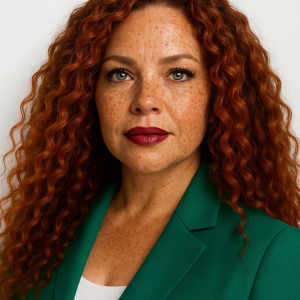
The Organic Humanity Movement, founded in 2017 by Lauren Evanthia Bernardo, positions itself as a transformative force seeking to dismantle South Africa’s multi-party system and replace it with a direct democracy model. OHM’s platform, which claims to “end all parties” and empower citizens through independent representation, has garnered attention for its radical critique of existing institutions and its populist rhetoric. Despite its ambitious vision, the party’s electoral performance has been marginal, raising questions about the viability and desirability of its proposals in the context of South Africa’s complex political, economic, and social realities.
Theoretical Framework: Populist Constitutionalism and Direct Democracy
Populist Ideology and Institutional Destruction
OHM’s rhetoric and programmatic orientation align closely with the academic definition of populism, which posits a dichotomy between the “pure people” and the “corrupt elite.” The movement’s assertion that “democracy in its current state is a ruse” and its targeting of political parties as inherently corrupt reflect populism’s tension with pluralist democratic norms. Political scientists have documented how populist movements often leverage constitutional change to deconstruct existing institutional orders, a phenomenon described as “populist constitutionalism.” OHM’s call for the constitutional abolition of political parties exemplifies this tendency toward institutional destructiveness.
Critiques of Direct Democracy
Empirical research on direct democracy reveals that, while such systems may reduce certain forms of fiscal volatility in established democracies, wholesale replacement of representative institutions often results in governance chaos and elite capture. The academic consensus holds that direct democracy, absent robust mediating structures, can become an instrument of elite manipulation and policy instability, rather than a vehicle for genuine popular empowerment.
Programmatic Proposals and Their Implications
Electoral System Overhaul
OHM proposes the replacement of South Africa’s proportional representation system with a model in which all public offices are filled by independently standing candidates, selected through preferential voting. While this model purports to enhance accountability and local representation, it risks exacerbating institutional fragmentation, undermining policy coherence, and increasing susceptibility to special interests. Comparative political science literature demonstrates that systems dominated by independents often lack the organizational capacity required for effective governance and are prone to personality-driven politics.
Constitutional Restructuring
The movement’s vision of constitutionally prohibiting political parties raises profound legal and normative concerns. Section 18 of the South African Constitution guarantees freedom of association, which encompasses the right to form political parties. OHM’s proposal would likely violate this fundamental right and contradict the evolutionary, rather than revolutionary, approach to transformation embedded in South Africa’s constitutional design.
Governance Philosophy
OHM advances a governance philosophy centered on self-reliance, family, and community, advocating for the minimization of government and corporate influence. While this reflects a populist valorization of “the people,” it oversimplifies the structural and historical realities underpinning South Africa’s socioeconomic challenges, including entrenched inequality, unemployment, and service delivery failures.
Electoral Performance and Public Reception
Despite its radical platform, OHM has failed to achieve meaningful electoral traction. In the 2024 national elections, the party garnered only 5,241 votes (0.03% of the total), securing no parliamentary representation. This marginal support, consistent with its performance in prior municipal elections, suggests that South African voters remain skeptical of OHM’s fundamentalist approach and prefer incremental reform over institutional destruction.
Multidisciplinary Critique
Political Science: Risks of Fragmentation and Democratic Backsliding
Political scientists warn that OHM’s abolition of parties would likely lead to heightened political fragmentation, diminished policy direction, and weakened mechanisms for minority representation. The proportional representation system was deliberately designed to ensure inclusive governance in a diverse society; its replacement with a purely independent model could re-entrench ethnic and regional divisions.
Economics: Policy Incoherence and Fiscal Instability
OHM’s economic proposals are marked by contradictions, such as advocating both free markets and drastic wage gap reductions without clear mechanisms. Economic research indicates that institutional reforms alone cannot address deep-seated structural problems like unemployment and inequality. Moreover, direct democracy systems have been associated with fiscal instability and policy volatility, as evidenced by international cases such as California.
Geopolitics: International Isolation and Regional Weakening
Adoption of OHM’s radical institutional changes would signal instability to international partners and investors, increasing capital flight and reducing South Africa’s geopolitical influence. Regionally, such a move could undermine South Africa’s leadership within the Southern African Development Community and the African Union, both of which rely on stable democratic institutions for effective cooperation.
Constitutional Law: Threats to Rights and Democratic Legitimacy
OHM’s program would likely contravene constitutional guarantees of association and minority rights. The movement’s strategy of seeking electoral victory to dismantle the very system that enabled it raises questions about democratic legitimacy and the principle of consent of the governed. Constitutional scholars emphasize that such “bait-and-switch” tactics are antithetical to the foundational principles of democratic accountability and the rule of law.
Populist Agenda and Academic Consensus
OHM exhibits classic features of populism: anti-pluralist rhetoric, institutional destructiveness, and the promise of simple solutions to complex problems. While claiming to represent the “true will of the people,” the movement’s proposals reflect elite-driven constitutional engineering more than grassroots empowerment. Academic literature on democratic backsliding underscores the dangers of such movements, which often precipitate institutional regression and the erosion of minority protections.
Conclusion
The Organic Humanity Movement’s agenda, while couched in the language of democratic renewal, constitutes a high-risk experiment in populist constitutional extremism. Across political science, economics, geopolitics, and constitutional law, the academic consensus is clear: OHM’s proposals would likely exacerbate South Africa’s challenges, fostering institutional fragmentation, policy incoherence, and democratic backsliding. The party’s minimal electoral support further suggests that the South African electorate recognizes the dangers inherent in radical institutional destruction. The path forward lies not in the abolition of political parties or the wholesale restructuring of democratic institutions, but in the incremental strengthening of existing frameworks, the deepening of social cohesion, and the pursuit of substantive equality within a pluralist constitutional order.