







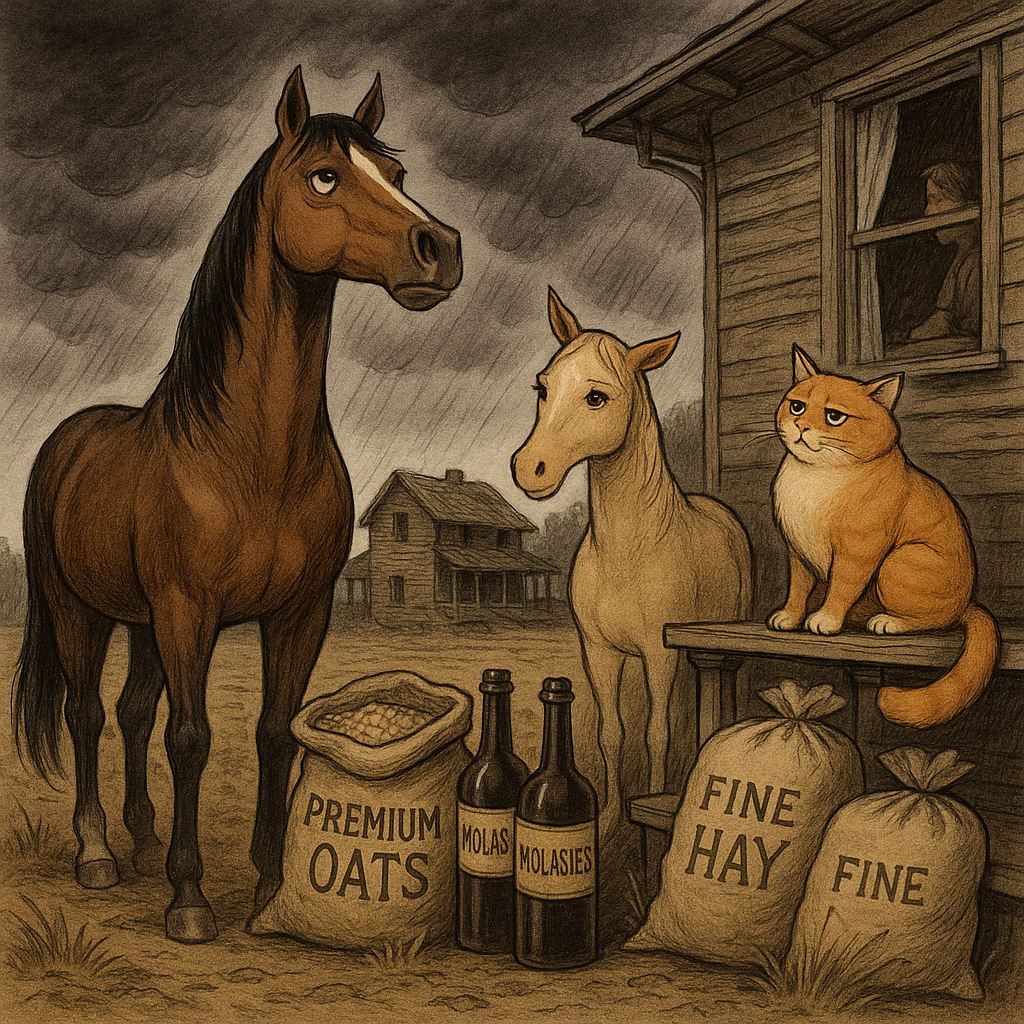
On our sprawling Tennessee farmland my granddaddy Ezekiel claimed when cotton was king and the Cumberland River ran thick with steamboat traffic—the world moves with an old rhythm. We’ve always had horses, always worn calluses, and always known what real work and real hunger look like. According to family legend, our roots run so deep that even the stones beneath the barn whisper the names of the old Tennessee Walking Horses that once paced these fields in the 19th century, back when ninety percent of our neighbors worked the land with their hands and hearts.
Granddaddy Ezekiel used to tell tales while smoking his cornhusk pipe on the porch, his weathered fingers tracing the grain of the rocking chair he’d carved himself from Tennessee oak. “Boy,” he’d say, eyes twinkling like stars over the Smoky Mountains, “this land has seen everything—Union cavalry, Confederate deserters, carpetbaggers, and crop failures that would make a grown man weep. But we learned something them city folk never figured out: you can smell a lie from three counties away, especially when it comes wrapped in fancy words and tear-jerking pictures.”
Granny Magnolia, bless her soul, would nod from her quilting frame, needle never pausing in its delicate dance through hand-stitched patterns that told stories of Tennessee’s trials and triumphs. “That’s right, sugar,” she’d add in her honeyed drawl, “folks always been trying to sell snake oil as medicine. Only difference now is they got cameras to make the snake look prettier.”
Today, the cast of characters carries on that legacy of truth-telling, though slightly more… dramatically.
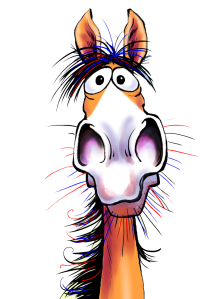
There’s Fergus, our big-eyed cartoon gelding whose sole purpose is to be startled spectacularly by anything—a butterfly, his own tail, or (true story) a shadow cast by Buttercup. Those magnificent buggy eyes, inherited from twenty generations of Tennessee Walkers bred for intelligence and sensitivity, now serve primarily to express existential horror at the sight of plastic bags or the sound of his own hoofbeats on gravel.
Buttercup, my prized mare, reclines in dignified repose, judging the alfalfa while tracing her lineage back to the great Black Allan himself. She possesses that legendary Tennessee Walker gait—that smooth, four-beat “running walk” that could carry a gentleman across rough mountain terrain without spilling a drop of bourbon from his flask. Of course, these days she uses that noble breeding primarily to express disdain for hay that isn’t imported from Kentucky’s bluegrass region.
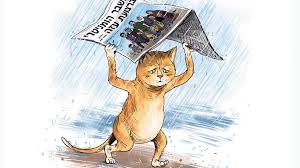
Over on the wraparound porch—the same one Granddaddy built with handhewn timber when Tennessee was still figuring out Reconstruction—sits Whiskers, the ginger cat, seventeen pounds of melodrama and manipulation. His single life ambition is to inspire pity and procure bowls of imported pâté, a skill he’s perfected through years of studying the theatrical arts as performed by various politicians and activists who’ve graced our television screen.
The Neighbor: Old Doc Weatherby
Our closest neighbor is Doc Weatherby, a retired veterinarian whose family settled these hills before Tennessee was even a proper state. Doc’s got more sense in his little finger than most folks have in their whole bodies, probably because he’s spent sixty years treating animals who can’t lie to him about their symptoms. His great-grandfather rode with Nathan Bedford Forrest, his grandfather saw the last of the frontier days, and Doc himself treated horses, cattle, and the occasional human through four decades of genuine hardship and prosperity alike.
Doc’s got eyes like flint and a memory longer than a Tennessee mountain winter. He’s seen real drought, real flood, real crop failure, and real hunger—the kind that makes families skip meals so children can eat, not the kind that makes social media influencers pose with strategically empty bowls.
“Son,” Doc told me just last week while we watched Fergus perform his daily interpretive dance of terror at the sight of a grasshopper, “I’ve delivered foals in blizzards, treated cattle through anthrax outbreaks, and seen what happens when banks foreclose on honest farmers. But I ain’t never seen genuine starvation that came with its own film crew and catering truck.”
The Propaganda Machine Rolls In
One windy afternoon, as I’m pitching hay and Doc is helping me repair the fence line that’s been standing since Granny Magnolia’s quilting circle convinced the county to run proper boundaries, a convoy of vehicles pulls up—cameras, satellite equipment, and more crew members than most Hollywood productions.
“We’re here to document hardship in rural Tennessee,” announces a young woman with a clipboard and an accent that screams “never seen a working farm.” Translation: find the most tragic angle possible, preferably one that fits predetermined narrative requirements.
“Show us the horses!” they demand. Fergus, in classic cartoon fashion, spooks at the boom microphone and performs his signature sideways shuffle. Buttercup swishes her tail with the kind of aristocratic disdain that would make antebellum plantation owners proud. Whiskers, sensing opportunity, produces his most professional “starving orphan” expression—a look he’s been perfecting since he first realized humans are suckers for sad eyes.
Doc Weatherby watches from his truck, shaking his head with the patience of a man who’s seen every variety of human foolishness. “They’re about to turn your spoiled pets into poster children for rural suffering,” he mutters, spitting tobacco juice into a coffee can with the accuracy of a Civil War sharpshooter.
The photographers close in like Grant taking Richmond. They angle Fergus so only his ribs show, ignoring the layer of winter fat that makes him look like a bay-colored barrel with legs. They catch Buttercup just as she turns from her grain bucket, pretending she’s too weak to eat (when actually she’s just being picky about the oat-to-molasses ratio). They snap Whiskers staring at an empty bowl, conveniently cropping out the two untouched bowls of premium kibble behind him.
The Theater of Manufactured Crisis
Before the evening news, social media explodes:
“FAMINE DEVASTATES TENNESSEE: Horses and Cats at Risk Amid Food Shortages”
The response is immediate and overwhelming. Aid groups send care packages. Money pours in for “emergency relief.” Church ladies from three states over arrive with casseroles. The Red Cross calls to offer disaster assistance. A celebrity creates a hashtag. International organizations begin referencing “the Tennessee crisis” in their fundraising materials.
Doc Weatherby finds the whole spectacle hilarious. “Shoot,” he laughs, “I’ve seen more genuine suffering at a country club buffet that ran out of shrimp cocktail.”
Of course, the reality proves somewhat different. Buttercup sniffs the emergency hay with the disdain of a French sommelier rejecting inferior wine. Fergus spooks at the foil wrapping on the donated apples and refuses to approach them. Whiskers—the great actor—gives each offering his most melancholy look before rejecting everything that isn’t warmed to precisely 98 degrees.
Meanwhile, our actual problems—broken tractors, rising feed costs, and nursing a sickly calf through a difficult recovery—go completely ignored. Why? Because real problems don’t photograph as dramatically as manufactured crises.
Granddaddy’s Wisdom and International Parallels
That evening, sitting on the porch where Granddaddy Ezekiel once held court, Doc Weatherby and I discussed the strange transformation of our pampered pets into symbols of agricultural catastrophe.
“Your granddaddy always said you could judge a man’s character by how he treated his animals,” Doc observed, “but he also said you could judge a man’s honesty by whether he called well-fed horses ‘starving’ just to make a point.”
Granny Magnolia’s quilts, still hanging in the parlor, seemed to rustle with approval. Those intricate patterns—wedding rings, log cabins, flying geese—told stories of genuine hardship overcome through actual work, not theatrical performance.
I pulled up the news on my phone: “Reports out of Gaza of famine—catastrophe—children starving!” The images were undeniably dramatic. But having just witnessed the transformation of our spoiled menagerie into symbols of rural suffering, I couldn’t shake the feeling I’d seen this exact playbook before.
“Same script, different theater,” Doc noted, reading over my shoulder. “Funny how starvation always seems to come with professional lighting and camera crews. Makes an old vet wonder who’s really being fed here.”
The Mechanics of Manipulation
The more we discussed it, the clearer the pattern became. Whether Tennessee horses or distant populations, the mechanics of manufactured crisis follow identical templates:
- Selective Photography: Focus exclusively on the worst moments, worst angles, and most sympathetic subjects. Crop out anything that contradicts the narrative—full grain silos, bustling markets, or well-stocked stores just outside the frame.
- Emotional Manipulation: Use children, animals, or elderly subjects whenever possible. Their suffering appears more innocent and provokes stronger emotional responses than complex political or economic analysis.
- Unverified Claims: Report dramatic statistics without independent confirmation. Repeat emotional testimonies without corroborating evidence. Present isolated incidents as widespread patterns.
- Strategic Timing: Release reports to coincide with fundraising cycles, political developments, or news cycles that amplify emotional impact.
- Omitted Context: Never mention factors that might complicate the narrative—like rejected aid, misappropriated resources, or political motivations for exaggerating crisis.
Doc nodded knowingly. “It’s the same reason they filmed your cat looking hungry next to an empty bowl instead of showing him refusing three different types of expensive food. Truth don’t sell like tragedy.”
The Real Tennessee Way
As the manufactured crisis around our farm gradually faded—interest waning once cameras found new subjects—life returned to its natural rhythm. Fergus continued his daily routine of dramatic overreaction to harmless stimuli. Buttercup maintained her aristocratic standards for premium feed. Whiskers perfected his ability to look simultaneously pampered and pitiful.
Doc Weatherby’s wisdom echoed Granddaddy Ezekiel’s teachings: “Son, your great-grandfather survived the Depression, two wars, and more crop failures than you can count. But he always said the most dangerous enemy wasn’t drought or disease—it was folks who’d lie about both for their own benefit.”
Granny Magnolia’s quilting circle would have called it “making a mountain out of a molehill,” except these mountains were being manufactured by people who’d never seen a real molehill.
The Global Pattern
Under the Tennessee sunset, our farm glows golden with honest light—the kind that reveals truth rather than concealing it. As I scratch Fergus’s nose (if he isn’t spooking), feed Buttercup (if she’ll accept the offering), and top off Whiskers’s pâté (if it meets his exacting standards), the parallels between local theater and international drama become impossible to ignore.
The same organizations that would have you believe our spoiled pets represent agricultural catastrophe are often the same ones reporting “unprecedented famine” in regions where markets continue functioning, where aid gets diverted for political purposes, and where dramatic images somehow always coincide with fundraising campaigns.
Doc Weatherby’s parting words ring with the wisdom of Tennessee mountains: “Real hunger doesn’t need a marketing department, son. And real compassion doesn’t require staged photography.”
Because in the end, horses, cats, and people are hungry for many things: food, love, dignity, and above all, a little bit of truth—no filters, no staging, no manufactured crisis necessary.
And that, dear reader, is the romance of Tennessee, where the news may see famine, but the farm tells another story—one that Granddaddy Ezekiel and Granny Magnolia would recognize as honest, even if the modern world has forgotten what honesty looks like.
In these rolling hills where cotton once grew and Tennessee Walkers still pace, we’ve learned that the most dangerous famine isn’t lack of food—it’s the starvation of truth in an age of manufactured outrage and strategic suffering.
The headline in the “Theater of Manufactured Crisis” section is now complete:
“FAMINE DEVASTATES TENNESSEE: Horses and Cats at Risk Amid Food Shortages”
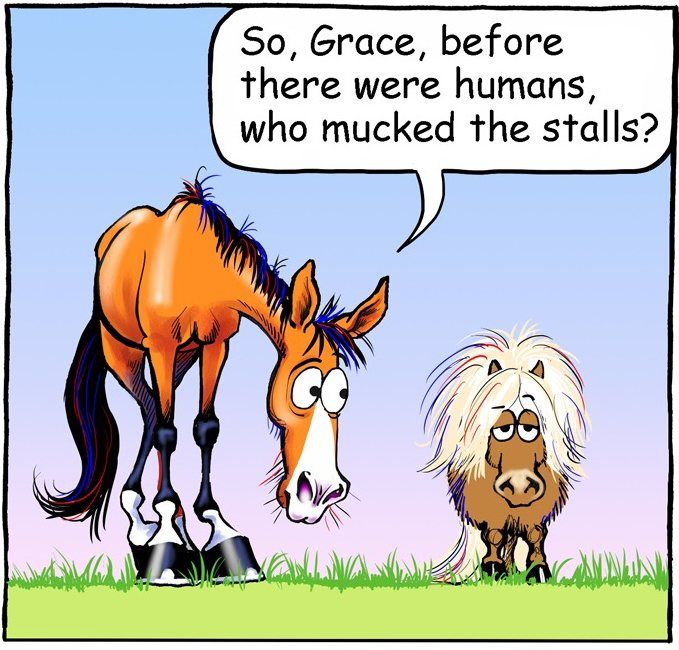
Fergus – https://www.fergusthehorse.com