

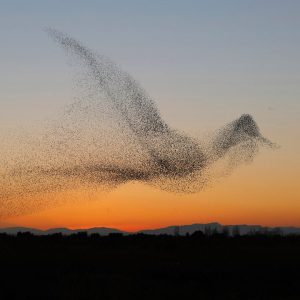

Jin, Jiyan, Azadî

How Kurdish Women Lit the Fire That Will Consume the Islamic Republic

“For me, women’s freedom is more valuable than the freedom of land and culture. No nation whose women are not free can be a free nation.”
— Abdullah Öcalan, imprisoned leader of the Kurdistan Workers’ Party


On September 16, 2022, a young Kurdish woman died in a Tehran hospital with a fractured skull—broken by batons swung by men who called themselves guardians of morality. Her name was Jinalife in Kurdish. But the Islamic Republic had already tried to erase even that: forcing her family to register her under a Persian name, Mahsa, as if changing a name could change a people, as if a state could rewrite a soul. She was twenty-two. Newly admitted to university. Visiting Tehran with her family. And then the morality police took her for one crime: that her headscarf sat “wrong” on her hair. They beat her until the body that carried her dreams could no longer carry her breath. She arrived at the hospital brain-dead. Photographs showed what the regime would later deny: catastrophic trauma, a face that did not look like “a pre-existing condition,” a head that did not look like “a heart attack.” The Islamic Republic lied the way it always lies—quickly, shamelessly, mechanically—offering any story that spared it from the obvious truth written in bruises and blood.

One day later, on September 17, thousands gathered in Saqqez, her Kurdish hometown in western Iran, to bury a daughter stolen in the capital. The state tried to bury her in secret, at speed, before grief could gather into rage. But Kurdish locals woke before dawn to stop them. They stood in the cold and the dark and said: No. Not like this. Not quietly. Not without witnesses. And when Jina’s body was lowered into the earth, something ancient and electric moved through the crowd. Women tore the headscarves from their heads and threw them to the ground—not like an act of fashion, but like an act of refusal. They cut their hair with scissors, with knives, with whatever their hands could find—cutting away not just cloth and strands, but forty-three years of suffocation, forty-three years of being told their bodies were sins, forty-three years of a state built on the lie that women’s freedom is chaos. And then the cemetery filled with sound.

Jin, Jiyan, Azadî!

Woman. Life. Freedom.

The chant rolled outward—across the cemetery, across Saqqez, across Kurdistan Province—and then across Iran like fire finding dry grass. Within days, more than a hundred cities erupted. Women danced unveiled in streets that had been trained to fear them. Students burned photographs of Supreme Leader Khamenei in university courtyards. Baluchi and Kurdish and Azeri and Persian voices braided together into something the regime could not arrest: a single, trembling demand spoken by millions—

Not reform.
Not negotiation.
Not “please.”

End it.

This was not a moment of spontaneous rage. This was an inheritance—Kurdish women’s decades of organizing, Iranian women’s 1979 uprising against compulsory hijab, years of quiet resistance lived in small defiance: a loosened scarf, a forbidden laugh, a life insisted upon. It finally found its voice in three words Kurdish women had been chanting since 2006: Jin, Jiyan, Azadî.

Today, years after Jina Amini’s murder, as protests return and the regime’s foundations creak under economic catastrophe and political decay, one truth is harder and harder to avoid: Jina’s death changed the physics of fear. The theocracy survives only through escalating violence—having bled out its legitimacy until only guns and gallows remain. Its collapse is no longer a moral question. It is a structural one. And when it falls, historians will trace the fracture line back to September 16, 2022—to a Kurdish woman whose name meant life, and whose death became a country’s refusal to keep dying in silence.

No Country Can Be Free Unless All Women Are Free

To understand why Jin, Jiyan, Azadî strikes like a match to gasoline, you have to understand where it comes from: the Kurdish freedom movement, a movement that learned—through betrayal, through loss, through the long loneliness of “after the revolution”—that women’s liberation is not a decorative promise to be fulfilled later. It is the beginning. It grew from hard experience. In the 1970s and 1980s, Kurdish women entered leftist movements and then the Kurdistan Workers’ Party (PKK), fighting for Kurdish freedom while being asked—by men who spoke the language of liberation—to accept the old chains at home and within the revolution itself. Men who preached equality and still expected women to serve, to shrink, to endure. Kurdish women refused. They built autonomous structures, wrote their own rules, protected one another, and articulated a politics that did not treat women as a footnote. Over time, this reshaped not only the Kurdish movement, but the imagination of what revolution could be. At the heart of this transformation stood Abdullah Öcalan, the imprisoned PKK leader who developed Jineology—the “science of women”—a framework that placed women’s freedom at the center of all liberation. His thesis was not polite:

If women are not free, society cannot be free.

Not “may not.”
Not “shouldn’t.”
Cannot.

Because a society that cages half its people cannot call itself liberated. It is simply reorganizing domination. This was not theory built in comfort. It was forged where comfort goes to die.

The Daughters of Kobani: Extreme Bravery Against Annihilation

The siege of Kobani in 2014–2015 was not just a battle. It was an attempt to erase a people—an existential war fought against ISIS, a force that promised rape, slavery, beheading, and annihilation. When ISIS reached Kobani, much of the world expected collapse. Erdoğan watched from across the border and said it would fall within days. The jihadists had numbers, weapons, momentum, cruelty without bottom. What they did not account for was the women. YPJ fighters fought street by street, house by house, body by body—against an enemy that believed women were property. They held positions under rocket fire. They crossed open ground under snipers. They endured losses that would have broken armies built on easier faith. And they did not retreat. They won. Kobani became the turning point—when ISIS’s aura of invincibility cracked. The world saw images that felt impossible: young women in fatigues, rifles slung over their shoulders, standing in rubble that had tried to become their grave—and refusing it. This is the lineage that echoes at Saqqez. When Kurdish women chanted Jin, Jiyan, Azadî at Jina’s funeral, they were not inventing a slogan. They were summoning a tested truth: that women do not have to wait for permission to be free. The bravery required to stand in that cemetery—knowing Iranian security forces would open fire, knowing a removed headscarf could mean arrest, torture, execution—came from the same wellspring as Kobani’s defenders: the decision that survival without freedom is a slower death. Jina was the spark. But sparks catch because the air is already heavy with fuel. In the months that followed, the regime answered chants with bullets. It answered mourning with mass arrests. It answered unveiled hair with prison cells. And it tried, again and again, to teach the old lesson: that terror will always win. But terror has a weakness—it creates witnesses. And witnesses create memory. And memory creates rage that does not go away.

Nika Shakarami, sixteen, went to protest on September 20, 2022. In her last phone call she said security forces were chasing her. Then she disappeared. Ten days later her family found her—her skull crushed. Authorities claimed she fell from a building. Then they stole her body and buried her in secret so her grave could not become a gathering place. Later leaks confirmed what so many already feared: she was assaulted and murdered by the very forces that claimed to “protect” society. She was sixteen. Sarina Esmailzadeh, sixteen, was bright and fluent and alive with the hunger of youth. She made videos about school, music, and the daily humiliation of restriction. She spoke the kind of truth that states fear because it sounds simple: “Nothing feels better than freedom.” She went to a protest on September 23, 2022. Security forces beat her repeatedly on the head until she died. Then they told her family she had “jumped.” She was sixteen. Armita Geravand, seventeen, an art student and taekwondo athlete, boarded a Tehran metro train in October 2023. Witnesses say she was confronted for not wearing a headscarf; she refused; she was attacked; she collapsed with traumatic brain injury. The regime locked down the hospital, pressured the family, arrested journalists. Another young life reduced to propaganda and denial. She was seventeen. And there were others: doctors like Ayda Rostami, killed for treating wounded protesters; young women like Yalda Aghafazli, brutalized for refusing to confess to lies; countless unnamed faces whose families still whisper their stories because speaking aloud can bring the knock at the door. These are not symbols. They are daughters, sisters, students, artists—people who should be worrying about exams, falling in love, choosing careers, arguing with friends, living. Instead, they became evidence. And the regime’s violence achieved the opposite of what it intended: each death widened the circle. Each funeral became a new beginning. Each lie hardened into a public certainty: that the Islamic Republic has only one argument left. Force.

Jin, Jiyan, Azadî: The Truth That Outlives the Regime

Years after September 2022, the Islamic Republic faces a convergence of crises repression can delay but not cure: collapsing currency, punishing inflation, deepening poverty, power outages, budget extraction that feels like robbery, elite infighting, succession uncertainty. But through all of it, one front remains the most destabilizing because it is daily, visible, and contagious: women’s refusal. A “quiet revolution” that never stopped. Women walking unveiled. Women returning to public life as if the law is a joke. A state forced to deploy surveillance, threats, business closures, arrests—just to keep fabric on hair. That is not strength. That is panic. When a regime needs cameras to enforce a headscarf, it has already lost the ideological war. It is governing bodies it no longer persuades. And a state that rules without belief is left with only fear—until fear stops working.

When the Islamic Republic finally falls—and it will fall—not because outsiders hand Iranians freedom, but because Iranians take back their agency, it will be remembered that the revolution did not begin in palaces or parliament. It began at a funeral. It began with women ripping away a symbol and revealing a fact the regime could never tolerate: that the state’s power depends on women agreeing to disappear. Jin, Jiyan, Azadî will endure because it is not a slogan stitched for a moment. It is a verdict. It says: A society that subjugates women is not stable. It is not moral. It is not free. It is simply armed. And armed systems can last a long time—until they can’t. Jina Mahsa Amini’s gravestone reads: “You didn’t die. Your name will be a code.” Her Kurdish name—Jina, life—became a rallying call precisely because the regime tried to take life and instead produced meaning. The girls murdered after her—Nika, Sarina, Armita—did not become “warnings.” They became witnesses. Their names are spoken not as requests, but as promises. And the women who defended Kobani against ISIS proved something the Islamic Republic cannot unlearn: women do not need men’s permission to fight for their futures. They can build, defend, and govern on their own terms.

This is what the beginning of the end looks like: Women walking unveiled through Tehran though cameras track their faces. Teenagers cutting their hair in solidarity though prison is real. Cities rising again and again because grief does not expire. A country deciding, quietly and then loudly, that the social contract is void. The Islamic Republic cannot kill enough women to restore its authority—because every murder creates more witnesses, and every witness carries a match. Jina Mahsa Amini lit a fire the regime has tried to smother with bullets, prisons, and lies. But fire does not negotiate with darkness. It spreads. And when historians write the story of the Islamic Republic’s fall, they will return to September 16, 2022. They will write that a young Kurdish woman’s murder exposed the lie at the heart of theocracy: that controlling women’s bodies is “order.” They will write that women looked at Jina’s battered face and said what millions had been holding in their throats for decades: No more.

Because three Kurdish words held the seed of a regime’s destruction:

Jin, Jiyan, Azadî.

Woman. Life. Freedom.

And no country can be free unless all women are free.
  • Centres on the utility, significance, and potential impact of research and analysis
  • Encompasses a range of research attributes, including significance, utility, timeliness, actionability, practicality, applicability, feasibility, innovation, adaptability, and impact
  • Mandates that research teams clearly define the scope and objectives of their work to ensure its timeliness, feasibility, and utility
  • May necessitate adjustments to research plans -such as research questions, data sources, or methodologies- in response to new insights or evolving circumstances

    In brief, we aim to shape and advance effective, timely solutions to critical Policy challenges
  • Emphasises the pursuit of robust, replicable scientific inquiry to uncover evidence-based insights that support informed decision-making,foster stakeholder consensus, and drive effective implementation
  • Is anchored by a well-defined purpose and carefully crafted research questions.Rigorous research produces findings derived from sound, contextually appropriate methodologies, which may include established techniques, innovative approaches, or experimental designs. Conclusions and recommendations are logically derived from these findings.
  • Encompasses a range of research attributes, including validity, reliability, credibility, systematicity, creativity, persuasiveness m, logical coherence, cutting-edge innovation, authority, robustness, replicability, defensibility, and adaptability
  • Mandates that LVS researchers remain abreast of, and potentially contribute  to, advancements jn theoretical frameworks, methodologies, and data sources.

    In brief, we conduct impartial analyses rooted in a clear purpose, employing rigorous logic and the most suitable theories, methods, and data sources available
  • Emphasises the thorough, effective, and appropriate documentation and dissemination of the research process (including design, development, execution, and support) and its outcomes (findings and recommendations)
  • Encompasses key research attributes, such as accountability, comprehensive reporting, replicability, and data accessibility
  • Mandates that research teams clearly articulate and document their purpose, scope, funding sources, assumptions, methodologies, data, results, limitations, findings, and policy recommendations to the fullest extent practicable, addressing the needs of those who oversee, evaluate, utilise, replicate, or are impacted by the research.
  • May be enhanced through supplementary materials, including research land, protocols, tools, code, datasets, reports, presentations, infographics, translations and videos
  • Requires LVS documents and products to have a defined purpose, be accessible, easily discoverable, and tailored to meet the needs of their intended audiences

    In brief, we communicate our research processes, analyses, findings, and recommendations in a manner that is clear, accessible, and actionable
  • Centres in the ethical, impartial, independent, and objective execution of research
  • Enhances the validity, credibility, acceptance, and adoption of research outcomes
  • Is upheld by institutional principles, policies, procedures, and oversight mechanisms
  • Is rooted in a genuine understanding of the values and norms of pertinent stakeholders

    In brief, we undertake research with ethical integrity, mitigate conflicts of interest, and preserve independence and objectivity

Engaged Contributor

All Visionary Benefits +

  • Members-only White Papers
  • Regular Contributor in Communiqué
  • Private in-person conversation with one of our Experts
  • Guest Speaker in Podcasts / Webinars
  • Recognition as Engaged Contributor (website)

Contribution Level: $150 monthly/$1,250 annually

Important Contributor

All Strategist Benefits +

  • Members-only Position papers
  • Recognition as Important contributor in Annual Impact Report
  • Complimentary copies of new publications
  • Publication of one article in Communiqué (full page) 
Contribution Level: $60 monthly/$500 annually

Engaged Supporter

All Sentinel Benefits +

  • Members-only Position papers (BRAVE, COMPASS, STRIDE)
  • Annual Impact Report
  • Access to members-only podcasts/webinars
  • One article in Communiqué (½ page)

Contribution Level: $30 monthly/$250 annually

  • Emphasises the integration and balanced consideration of diverse, significant perspectives throughout the research process to ensure objective and equitable representation
  • Fosters awareness of the comprehensive range of scientific and policy viewpoints on multifaceted issues
  • Guarantees that these diverse perspectives are fairly addressed throughout the research process, accurately represented, and evaluated based on evidence
  • Incorporates perspectives from individuals with varied backgrounds and expertise within research teams and through collaboration with diverse reviewers, partners and stakeholders
  • Strengthens research teams’ capacity to comprehend the policy context and enhance the applicability of findings and conclusions

    In brief, we systematically integrate all relevant perspectives across the research process
  • Enhances comprehension of the problem and it’s context, while strengthening research design
  • Guides the evaluation of potential solutions and facilitates effective implementation
  • Entails incorporating diverse, relevant perspectives to promote rigorous, mitigate unintended bias in research design, execution, and dissemination, and ensure findings are pertinent and clear to key stakeholders
  • Arrives to make LVS research accessible, where feasible, to a wide array of stakeholders beyond sponsors, decision-makers, or implementers
  • Occurs across the research life cycle through formal and informal methods, including discussions, interviews, focus groups, surveys, advisory panels, presentations, and community engagements

    In brief, we actively collaborate with stakeholders vested in the conduct, interpretation, and utilisation of our research.

Entry Level

Recognition as Supporter
  • Monthly Newsletter Communiqué
  • Briefs (BRAVE, COMPASS, STRIDE)
  • Beyond Boundaries Podcast
  • Digital Membership
  • Merchandising (in process)
Contribution Level: $7 monthly/$60 annually

We offer a 4-tier program with highly exclusive Benefits. Read more about this strategic partnership.

You are invited to contribute at your discretion, and we deeply appreciate your support. Together, we can make a meaningful impact. To join us or learn more, please contact us at [email protected]

The Liberty Values & Strategy Foundation: A Legacy Reborn

June 11, 2025 – 249 years ago, on this very date, history pivoted on the axis of human possibility.

June 11, 1776. The Continental Congress, meeting in the hallowed chambers of Independence Hall, appointed five extraordinary visionaries to a committee that would forever alter the trajectory of human civilization. Thomas Jefferson, John Adams, Benjamin Franklin, Roger Sherman, and Robert R. Livingston—men of profound intellect and unwavering conviction—were entrusted with the sacred task of drafting the Declaration of Independence. In that momentous decision, they established not merely a political document, but a philosophical foundation upon which the principles of liberty, self-governance, and human dignity would rest for generations yet unborn.

Today, We Stand at Another Threshold

On June 11, 2025—exactly 249 years later—the Liberty Values & Strategy Foundation emerges to carry forward the luminous torch of those founding principles into the complexities of our modern age. Just as Jefferson and his fellow committee members understood that true independence required both visionary thinking and strategic action, the Liberty Values & Strategy Foundation recognizes that preserving and advancing liberty in the 21st century demands sophisticated analysis, bold leadership, and unwavering commitment to the fundamental values that define human flourishing.

A Foundation Built on Timeless Principles

The parallels between then and now are profound:

  • Then, Five visionary leaders gathered to articulate the philosophical foundations of a new nation. Now, A new foundation emerges to advance strategic thinking on liberty’s most pressing challenges
  • Then, The Committee of Five understood that ideas must be coupled with practical wisdom. Now, The Liberty Values & Strategy Foundation bridges timeless principles with contemporary strategic insight
  • Then, They recognized that liberty requires constant vigilance and thoughtful stewardship. Now, We commit to that same vigilance in an increasingly complex world

In the shadow of Ethiopia’s Omo Valley, where the Mursi people etch resilience into their skin through lip plates and the Hamar tribe’s bull-jumping rites forge indomitable courage, a new chapter in the global fight for liberty begins. The Liberty Values & Strategy Foundation (LVS Foundation) launches today as a vanguard of 21st-century research, merging scholarly rigor with actionable strategy through its revolutionary Cohesive Research Ecosystem (CORE). Founded by Dr. Fundji Benedict—a scholar whose lineage intertwines Afrikaner grit, Ethiopian sovereignty, and Jewish perseverance—this institution embodies a legacy of defiance inherited from history’s most audacious truth-seekers, from Zora Neale Hurston to the warrior women of Ethiopia. This duality—scholarship as sword and shield—mirrors Dr. Benedict’s own journey. For 10+ years, she navigated bureaucratic inertia and geopolitical minefields, her resolve hardened by the Ethiopian women warriors who once defied Italian fascism.


I. The Hurston Imperative: Truth as a Weapon

Zora Neale Hurston, the Harlem Renaissance icon who “broke through racial barriers” and declared, “Truth is a letter from courage,” is the Foundation’s spiritual lodestar. Like Hurston, who documented Black life under Jim Crow with unflinching authenticity, the LVS Foundation wields research as both shield and scalpel. BRAVE, its human rights arm, intervenes in crises with the precision Hurston brought to folklore studies, transforming marginalized voices into policy. When Somali warlords displace the Gabra people or Ethiopian officials seize tribal lands, BRAVE acts with the urgency of Hurston’s anthropological missions, ensuring that “truth-telling becomes liberation”.

Dr. Benedict’s decade-long journey mirrors Hurston’s defiance. “My ancestors did not bow. I will not bow,” she asserts, her cadence echoing the Omo Valley’s ceremonial chants. This ethos permeates the Foundation’s CORE model, where BRAVE, COMPASS, and STRIDE operate in symphonic unity. “CORE is our answer to siloed thinking,” Dr. Benedict explains. “Through this cohesive ecosystem, BRAVE, COMPASS, and STRIDE work in concert—breaking down

barriers between academic research, fieldwork, and strategic action. This enables us to develop innovative solutions and stride toward lasting change”.


II. Necropolitics and the Battle for Human Dignity

The Foundation’s research agenda confronts necropolitics—a term coined by Achille Mbembe to describe regimes that decide “who may live and who must die”. In Somalia, where Al-Shabaab turns villages into killing fields, and South Africa, where post-apartheid politics increasingly marginalize minorities, the LVS Foundation exposes systemic dehumanization. STRIDE, now correctly positioned as the bulwark against terrorism and antisemitism, dismantles networks fueled by Qatari financing and ideological venom. COMPASS, the geopolitical hub, maps Qatar’s $6 billion influence campaigns, revealing how Doha’s alliances with Islamist groups destabilize democracies from Sahel to Paris, France.

“Qatar hides behind diplomatic immunity while funding mass murder,” Dr. Benedict states, citing Israeli intelligence linking Qatari funds to Hamas’s October 7 massacre. Meanwhile, BRAVE echoes fieldwork in Ethiopia’s Babille Elephant Sanctuary—where Dr. Benedict has studied bee barriers to resolve human-wildlife conflict—and epitomizes the Foundation’s ethos: “We turned conflict into cooperation, just as our ancestors turned adversity into art”.


III. The Ethiopian Woman Warrior: A Blueprint for Ferocity

The Foundation’s DNA is steeped in the legacy of Ethiopian women who weaponized intellect and audacity. Woizero Shewareged Gedle, who orchestrated prison breaks and ammunition heist during Italy’s occupation, finds her echo in STRIDE’s Intelligence operations. She struck an Italian officer mid-interrogation and declared, “You may imprison me, but you will not insult me”. Her defiance lives in STRIDE’s intelligence operations and BRAVE’s land-rights advocacy for all minorities like the Hamar, who endure ritual whipping to cement bonds of loyalty – a fight as visceral as it is cerebral -, but also the tribes or the Afrikaners in South Africa who face expropriation of their property without compensation. Dr. Benedict’s leadership rejects the false binary between academia and activism: “Research is not abstraction—it is alchemy. We transmute data into justice”.


IV. Conclusion: Lighting the Torch for Generations

The Liberty Values & Strategy Foundation stands as more than an institution—it is a living testament to the unyielding spirit of those who refuse to let darkness prevail. In a world where necropolitics reduces human lives to chess pieces and terrorism metastasizes in the shadows, the Foundation’s CORE research ecosystem illuminates a different path: one where rigorous scholarship becomes the catalyst for liberation. Every report published, every policy advocated, and every community defended is a reaffirmation of democracy’s most sacred tenet—that every life holds irreducible value.

Dr. Benedict’s vision transcends academic abstraction: BRAVE’s defense of pastoralist communities, COMPASS’s geopolitical cartography, and STRIDE’s dismantling of hate networks are not isolated acts but threads in a tapestry woven with the same audacity that Zora Neale Hurston brought to anthropology and Woizero Shewareged Gedle to resistance. The Foundation’s decade-long gestation mirrors the patience of Ethiopian honey hunters who wait years for the perfect hive—a reminder that enduring change demands both urgency and perseverance.

As a beacon for liberty, the LVS Foundation invites collaboration across borders and disciplines. To governments grappling with Qatar’s influence campaigns, to activists documenting human rights abuses, to citizens weary of complacency, the Foundation offers not just data but a blueprint for courage and defiance. Its research ecosystem—dynamic, interconnected, and unapologetically action-oriented—proves that knowledge, when wielded with integrity, can dismantle even the most entrenched systems of oppression.


The Torch Burns Bright

Over the past decade, Dr Benedict has combined rigorous academic work with on-the-ground engagement, building the knowledge and networks required to create this institution. Now, as the Foundation opens its doors, it stands as a testament to principled scholarship and action. In the legacy of Zora Neale Hurston’s fearless truth-telling, the LVS Foundation embraces the

power of knowledge guided by values. Crucially, the LVS Foundation maintains strict independence from any partisan or governmental funding. This non-partisanship is a cornerstone of its identity. “From day one, we refuse to be anyone’s instrument – no government, no party. Our independence guarantees that our voice remains unbiased and our research uncompromised,” Dr. Benedict emphasizes. “We owe that to the truth we seek. Hurston taught us about authenticity and courage; in that spirit, we will not pander or censor ourselves. We will ask the hard questions and pursue answers – wherever they lead – in service of liberty and human dignity.”

The revolution Dr. Benedict ignited is not hers alone. It belongs to every individual who dares to believe that democracy can be defended, that integrity can be restored, and that liberty is worth every sacrifice. Zora Neale Hurston once wrote, “There are years that ask questions and years that answer.” For the LVS Foundation, this is the year of answers and a responsibility to honor Hurston’s legacy by ensuring truth is not just spoken but lived. Those seeking to support Liberty Values & Strategy Foundation—through funding, fieldwork, or amplification—are welcomed at [email protected] or [email protected].