












Contemporary South Africa manifests a profound crisis that transcends conventional analyses of corruption, revealing instead a systematic necropolitical apparatus that operates through the intersection of state capture, endemic corruption, and the production of political death. Drawing upon Achille Mbembe’s theoretical framework of necropolitics—the sovereign power to determine who may live and who must die—this analysis examines how corruption functions not merely as economic malfeasance but as a fundamental mechanism of political control that creates “deathworlds” for vast populations while concentrating life-preserving resources among a predatory elite.
The Necropolitical Architecture of State Capture
State capture in South Africa represents more than the conventional understanding of regulatory capture or grand corruption. Rather, it embodies what Mbembe identifies as the contemporary manifestation of necropower—the capacity to expose populations to conditions of “living death” while simultaneously ensuring the privileged accumulation of resources by those who control the sovereign machinery. The Zondo Commission’s findings reveal that state capture involved “the allocation and distribution of state power and resources, directed not for the public good but for private and corrupt advantage”, creating what can be understood as a systematic necropolitical project.
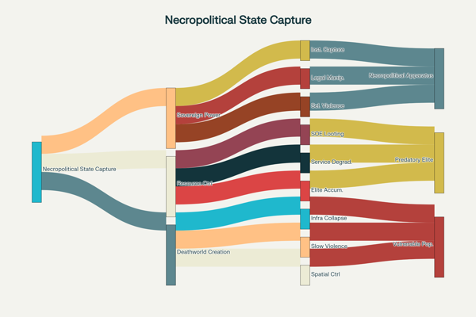
Figure 1: The Necropolitical Apparatus in Post-Apartheid South Africa – A hierarchical framework showing how necropolitical power operates through four interconnected levels to create and maintain “deathworlds” through systematic corruption and state capture.
The apparatus of state capture during the Zuma administration exemplifies the necropolitical logic whereby the state’s primary function becomes the management of death rather than the fostering of life. Through the deliberate weakening of institutions such as the South African Revenue Service (SARS), the systematic looting of state-owned enterprises like Eskom and Transnet, and the manipulation of law enforcement agencies, the captured state created conditions that Mbembe would recognize as characteristic of contemporary necropolitics. These actions produced what can be termed “slow violence”—a form of structural violence that operates through the gradual erosion of life-sustaining infrastructure and services.
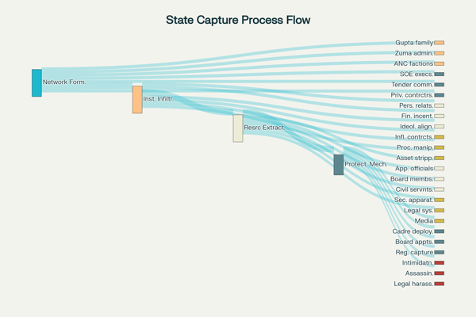
Figure 2: State Capture Process Flow in South Africa – A sequential process diagram illustrating how state capture evolved from network formation through institutional infiltration to resource extraction and protection mechanisms during the Zuma administration.
The concept of “slow violence,” developed by Rob Nixon and increasingly applied to understand structural forms of oppression, provides a crucial lens for analyzing how corruption functions as a necropolitical strategy. In the South African context, the systematic degradation of public services, the collapse of municipal infrastructure, and the erosion of educational and healthcare systems represent forms of slow violence that disproportionately affect the most vulnerable populations. This process creates what Mbembe describes as “deathworlds”—spaces where populations are subjected to conditions of existence that blur the boundaries between life and death.
The African National Congress and the Institutionalization of Corruption
The African National Congress (ANC), once celebrated as the vanguard of liberation, has increasingly become what scholars identify as a vehicle for necropolitical governance. The party’s transformation from a liberation movement to what critics describe as a “corrupt cadre” entity reflects the broader post-colonial trajectory that Mbembe analyzes in his work on necropolitics. The ANC’s deployment of cadres throughout state institutions, combined with its tolerance of corruption among its leadership, has created what amounts to a systematic necropolitical apparatus.
The phenomenon of factionalism within the ANC, particularly the divisions between the Zuma and Ramaphosa factions, demonstrates how necropolitical power operates through the management of internal conflicts and the selective application of violence. The factional battles within the party have resulted in a pattern of political killings, particularly in KwaZulu-Natal, where the Global Initiative Against Transnational Organized Crime recorded significant increases in targeted assassinations. These killings represent the direct manifestation of necropolitical power—the sovereign capacity to determine who may live and who must die within the political sphere.
The ANC’s embrace of what Ramaphosa himself acknowledged as corruption has created what can be understood as a “society of enmity,” to use Mbembe’s. The party’s “step-aside” rule, implemented in response to corruption charges, reveals the extent to which corrupt practices have become normalized within the organization. The expulsion of figures like Ace Magashule demonstrates not a genuine commitment to anti-corruption measures but rather the selective application of necropolitical power to manage internal dissent.
The Economic Freedom Fighters and the Reproduction of Necropolitical Patterns
The Economic Freedom Fighters (EFF), despite positioning itself as a radical alternative to the ANC, has reproduced many of the same necropolitical patterns that characterize post-apartheid South African politics. The allegations surrounding Julius Malema and Floyd Shivambu’s involvement in the VBS Mutual Bank scandal reveal how opposition politics in South Africa operates within the same necropolitical framework that governs the broader political system.
The VBS scandal, which involved the looting of approximately R2 billion from a bank that primarily served poor communities in Limpopo, exemplifies the necropolitical logic whereby the resources of the most vulnerable populations are systematically transferred to political elites. The fact that these allegations involve leaders who present themselves as champions of the poor reveals the extent to which necropolitical power has permeated all levels of South African political life.
The EFF’s response to these allegations—through denials, legal challenges, and attempts to deflect responsibility—demonstrates what Mbembe identifies as the characteristic behavior of necropolitical actors who seek to maintain their position within the “society of enmity” while avoiding accountability for their actions. The party’s continued political activities despite these serious allegations reveal the normalization of corruption within South Africa’s political system.
The Production of Political Death and the Targeting of Whistleblowers
The systematic targeting of whistleblowers in South Africa represents one of the most direct manifestations of necropolitical power. The murders of figures like Babita Deokaran, who exposed corruption in COVID-19 procurement, and the forced exile of Athol Williams, who testified before the Zondo Commission, demonstrate how the necropolitical apparatus operates to silence those who threaten its operations. These actions reveal what Mbembe identifies as the necropolitical state’s capacity to determine who may speak and who must be silenced.
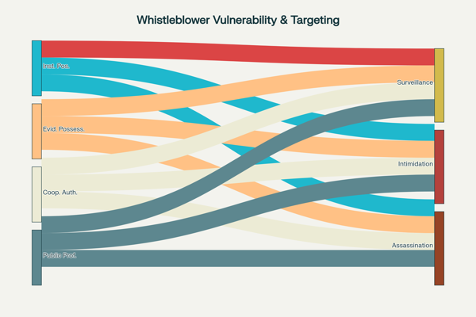
Figure 3: Whistleblower Vulnerability and Necropolitical Targeting Framework – A comprehensive diagram showing how specific vulnerability factors make whistleblowers targets for necropolitical violence, ranging from surveillance to assassination.
The broader pattern of whistleblower victimization—including dismissals, harassment, and in extreme cases, assassination—creates what can be understood as a “climate of fear” that serves to protect the necropolitical apparatus from exposure. The inadequacy of legal protections for whistleblowers, despite the existence of the Protected Disclosures Act, reveals how the formal legal framework serves to legitimize rather than constrain necropolitical power.
Organizations like the Whistleblower House, Corruption Watch, and the LVS Foundation represent attempts to create alternative structures of protection and support for those who challenge the necropolitical apparatus. However, their limited resources and the broader context of state capture mean that these efforts operate within severe constraints. The fact that many whistleblowers are forced to flee the country or live in hiding demonstrates the extent to which necropolitical power has permeated South African society.
The Slow Violence of Structural Inequality
The necropolitical analysis of South Africa must account for the ways in which corruption intersects with the broader structures of inequality that characterize post-apartheid society. The persistence of what scholars term “liquid violence”—the systematic denial of access to basic services like water—reveals how necropolitical power operates through the management of essential resources. The collapse of municipal services, the ongoing energy crisis, and the deterioration of public infrastructure represent forms of slow violence that create conditions of “living death” for millions of South Africans.
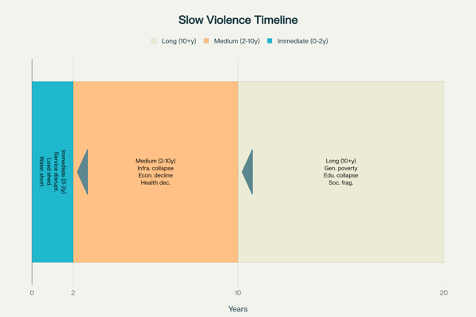
Figure 4: Temporal Dimensions of Slow Violence in South Africa – A timeline showing how corruption-induced slow violence manifests differently across immediate, medium-term, and long-term timeframes, with escalating impacts on affected populations.
The concept of “structural violence,” developed by Johan Galtung and increasingly applied to understand post-apartheid South Africa, provides a framework for analyzing how corruption functions as a mechanism of social control. The systematic underfunding of public services, the collapse of educational institutions, and the erosion of healthcare systems represent forms of structural violence that disproportionately affect the most vulnerable populations while preserving resources for the political elite.
The spatial dimensions of this violence—the concentration of service delivery failures in townships and rural areas while wealthy suburbs maintain access to private alternatives—reveal how necropolitical power operates through the management of space and mobility. The persistence of what many scholars term “spatial apartheid” demonstrates how the necropolitical apparatus has adapted colonial and apartheid-era strategies of spatial control to contemporary conditions.
The International Dimensions of Necropolitical Governance
The international dimensions of state capture in South Africa reveal how necropolitical power operates across national boundaries. The involvement of the Gupta family, the connections to networks in Dubai and India, and the broader patterns of illicit financial flows demonstrate how the necropolitical apparatus extends beyond the boundaries of the South African state. The failure of international anti-corruption mechanisms to effectively address these networks reveals the limitations of conventional approaches to understanding and combating corruption.
The role of international corporations in facilitating state capture—including consulting firms like Bain & Company and international banks that processed suspicious transactions—demonstrates how necropolitical power operates through global networks of complicity. The fact that many of these actors have faced minimal consequences for their role in enabling corruption reveals the extent to which necropolitical power has become normalized within global systems of governance.
The international community’s response to South Africa’s corruption crisis—characterized by diplomatic statements, conditional aid, and technical assistance—reveals the inadequacy of conventional approaches to addressing necropolitical governance. The persistence of corruption despite extensive international engagement demonstrates the need for more fundamental approaches to understanding and confronting necropolitical power.
Toward a Politics of Life: Resistance and Transformation
Despite the pervasive nature of necropolitical governance in South Africa, there are significant forms of resistance that point toward alternative possibilities. The work of civil society organizations, the courage of whistleblowers, and the persistence of investigative journalism represent what Mbembe identifies as the potential for creating “politics of life” that challenge necropolitical power. The emergence of organizations like the LVS Foundation, which advocates for federal governance models and constitutional reform, demonstrates the potential for institutional innovations that could constrain necropolitical power.
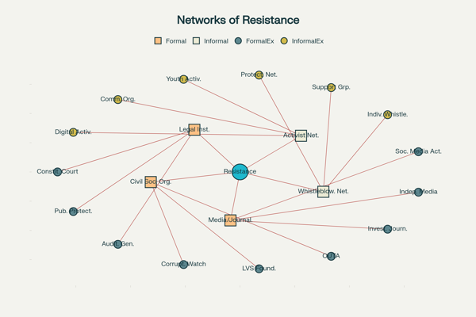
Figure 5: Networks of Resistance to Necropolitical Power – A network diagram illustrating the formal and informal structures that challenge necropolitical governance in South Africa, showing their interconnections and complementary functions.
The role of young activists like Joe Emilio, who has used documentary filmmaking and social media to expose corruption and mobilize public opinion, represents a new generation of resistance to necropolitical governance. These efforts demonstrate the potential for creating alternative forms of political engagement that challenge the necropolitical apparatus while building broader coalitions for change.
The international civil society networks that support South African whistleblowers and anti-corruption activists—including organizations like the Platform to Protect Whistleblowers in Africa (PPLAAF) and international advocacy groups—represent attempts to create transnational networks of resistance to necropolitical power. These efforts demonstrate the potential for building international coalitions that can challenge the global dimensions of necropolitical governance.
Conclusion: The Imperative for Transformative Action
The analysis of corruption in South Africa through the lens of necropolitics reveals the inadequacy of conventional approaches to understanding and addressing this crisis. The systematic nature of corruption, its intersection with broader patterns of inequality and violence, and its role in reproducing conditions of “living death” for millions of South Africans demonstrate that what is at stake is not merely the problem of malfeasance but the fundamental question of political life itself.
The necropolitical apparatus that has emerged in post-apartheid South Africa represents a profound betrayal of the democratic promise of 1994. The transformation of the state from an instrument of liberation to a mechanism of predation reveals the extent to which necropolitical power has colonized the institutions of democracy. The systematic targeting of whistleblowers, the collapse of public services, and the normalization of corruption within political life demonstrate that what is required is not merely institutional reform but fundamental transformation of the political system.
The international community, South African civil society, and individual citizens must recognize that the crisis facing South Africa is not merely a problem of corruption but a crisis of political life itself. The systematic production of “deathworlds” through corruption, the targeting of those who challenge the system, and the broader patterns of structural violence demand urgent and transformative action.
The organizations and individuals who continue to challenge necropolitical power—including the LVS Foundation, courageous whistleblowers like Joe Emilio, and the broader network of civil society organizations—represent the potential for creating alternative forms of political life. However, their efforts require sustained support, protection, and recognition from the international community.
The choice facing South Africa, and the international community that claims to support democratic values, is stark: either confront the necropolitical apparatus that has captured the state and restore the conditions for political life or accept the normalization of corruption and the systematic production of death that characterizes contemporary South African governance. The courage of those who continue to resist, despite the enormous personal costs, provides hope that transformation remains possible. But this transformation will require not merely institutional reform but a fundamental reimagining of political life itself—a politics that chooses life over death, justice over predation, and the common good over private accumulation.
The urgency of this moment cannot be overstated. The longer the necropolitical apparatus remains in place, the more difficult it becomes to restore the conditions for democratic life. The systematic erosion of institutions, the normalization of corruption, and the broader patterns of structural violence create conditions that make transformation increasingly difficult. The time for half-measures and incremental reform has passed. What is required is nothing less than the restoration of political life itself—a politics that serves life rather than death, hope rather than despair, and the common good rather than private predation.
Acronyms and Abbreviations
ANC: African National Congress
BOSASA: Business Operations Support and Advisory Services
DENEL: Armaments Corporation of South Africa
EFF: Economic Freedom Fighters
ESKOM: Electricity Supply Commission
LVS: Lotus Veritas Seminibus (Truth in Seeds)
NPA: National Prosecuting Authority
OUTA: Organisation Undoing Tax Abuse
PDAA: Protected Disclosures Amendment Act
PPE: Personal Protective Equipment
PPLAAF: Platform to Protect Whistleblowers in Africa
PRASA: Passenger Rail Agency of South Africa
SAA: South African Airways
SABC: South African Broadcasting Corporation
SARS: South African Revenue Service
SIU: Special Investigating Unit
SOE: State-Owned Enterprise
TRANSNET: Transport Network
UNCAC: United Nations Convention Against Corruption
VBS: VBS Mutual Bank
Bibliography
Davies, T. (2019). Slow violence and toxic geographies: ‘Out of sight’ to whom? Environment and Planning C: Politics and Space, 37(1), 409-427.
De Klerk, R., & Solomon, H. (2019). The institutionalisation of endemic corruption: State capture in South Africa. Politikon, 46(2), 64-87.
Diale, A. J. (2016). Whistleblowing and whistleblower protection in South Africa (2001-2015): A path traversed. International Journal of Business and Management, 11(6), 424-438.
Dintwe, S. (2012). The African National Congress led government’s (in)ability to counter public corruption: A forensic criminological perspective. Africa’s Public Service Delivery & Performance Review, 1(2), 27-45.
Fanon, F. (1963). The wretched of the earth. Grove Press.
February, J., & Mirzoyev, S. (2024). Commissions, corruption and state capture: Charting the way forward for South Africa. South African Institute of International Affairs Special Report, 15-32.
Foucault, M. (1976). The history of sexuality, Volume 1: An introduction. Pantheon Books.
Galtung, J. (1969). Violence, peace, and peace research. Journal of Peace Research, 6(3), 167-191.
Iturriaga, N., & Denman, D. S. (2022). The necropolitical spectrum: Political lives of the surplus dead. Human Remains and Violence, 8(1), 3-28.
Mbembe, A. (2003). Necropolitics. Public Culture, 15(1), 11-40.
Mbembe, A. (2019). Necropolitics. Duke University Press.
Ndayisenga, Z. (2022). Fanon on the arbitrariness of using violence: An inevitable for both colonialism and decolonization. Journal of Asian and African Studies, 57(4), 672-688.
Nixon, R. (2011). Slow violence and the environmentalism of the poor. Harvard University Press.
Lewis, D. (2024). Corruption v democracy part one: Capturing the South African state. New Agenda, 95, 8-15.
Madonsela, T. (2016). State of capture report. Public Protector South Africa.
Martin, M. E., & Solomon, H. (2019). Understanding the phenomenon of ‘state capture’ in South Africa. South African Crime Quarterly, 67, 23-35.
Pillay, P., Chitunhu, K., & Chivandire, L. (2023). State capture in South Africa: Going back to basics. African Journal of Public Affairs, 14(1), 152-170.
Radulovic, U. (2021). The predicament of the unprotected: Why lack-lustre legislation fails South African whistleblowers. African Journal of Business Ethics, 17(1), 86-104.
Wright, J. (2023). The plight of South African whistle-blowers: Searching for effective protection. Obiter, 44(4), 723-751.
Zondo, R. (2022). State capture commission report. Judicial Commission of Inquiry into State Capture.