













The Islamic Republic of Iran finds itself in an unprecedented position of international isolation during the ongoing conflict with Israel in June 2025, with no major power willing or able to provide meaningful military or strategic assistance. This isolation stems from a complex convergence of nuclear policy violations, collapsed regional alliances, geopolitical constraints on potential allies, and fundamental shifts in Middle Eastern power dynamics that have left Tehran diplomatically and militarily isolated when it most needs international support.
The Current Crisis and Iran’s Desperate Appeals
Analysis of key factors contributing to Iran’s international isolation during the June 2025 conflict with Israel
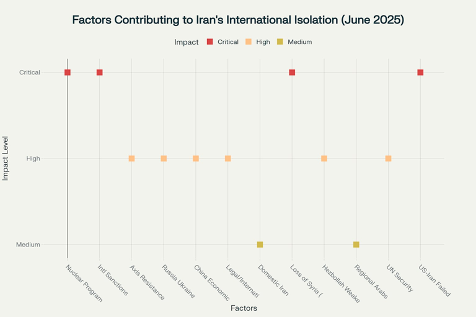
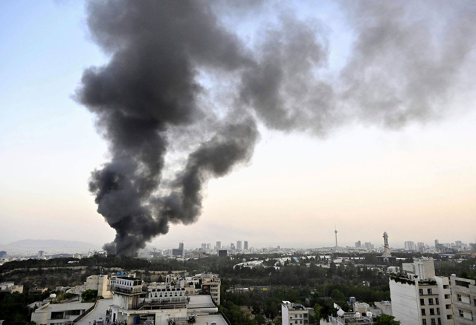
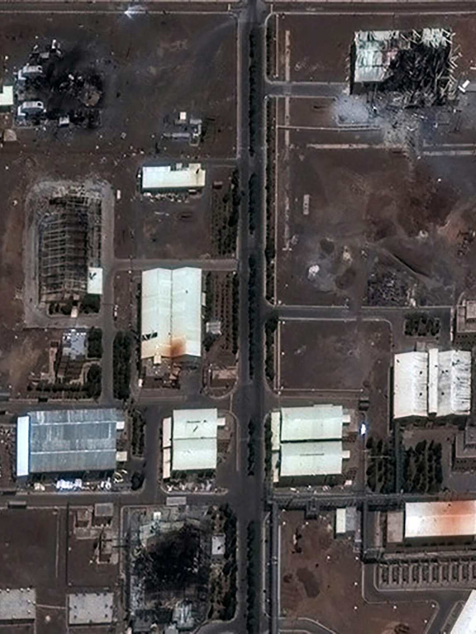
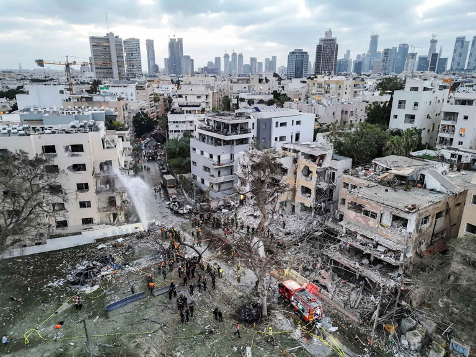
Since June 13, 2025, Israel has conducted extensive military operations targeting Iran’s nuclear facilities, military infrastructure, and senior leadership. The attacks have resulted in significant damage to key nuclear sites including Natanz and Isfahan, killed numerous Iranian military commanders and nuclear scientists, and caused widespread civilian casualties with over 585 Iranian deaths reported. Iran’s immediate response has been to seek international intervention through multiple diplomatic channels, including urgent appeals to the UN Security Council and requests for mediation from Qatar and Oman .
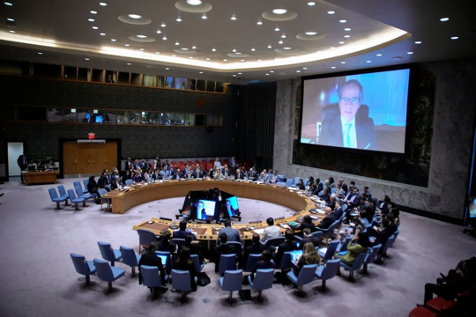
Delegates participate in a United Nations Security Council meeting discussing global affairs.
Iran’s Foreign Minister Abbas Araghchi has formally requested Security Council meetings, asserting that Israel has “crossed every line” and demanding that the international community not allow such “crimes to go unpunished”. However, these appeals have largely fallen on deaf ears, with the Security Council unable to provide meaningful support due to Western opposition and the broader geopolitical dynamics that have isolated Iran .
Nuclear Program Violations and International Legitimacy
The foundation of Iran’s current isolation lies in its nuclear program violations, which have fundamentally undermined its international legitimacy. On June 12, 2025, just one day before Israel’s attacks began, the International Atomic Energy Agency (IAEA) found Iran non-compliant with its nuclear obligations for the first time in twenty years. This finding came after reports highlighted Iran’s general lack of cooperation with international inspectors and concerns about undisclosed nuclear activities.
Aerial view of the Natanz nuclear facility in Iran, highlighting an area of construction or damage.
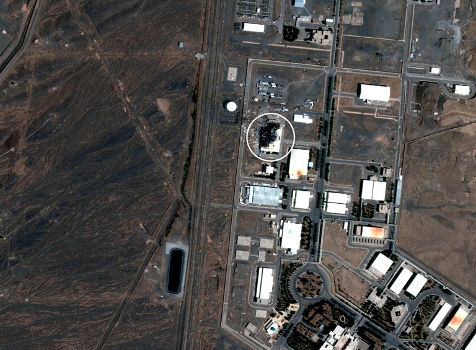
Iran’s nuclear program has reached unprecedented levels of advancement, with the country possessing approximately 250 kilograms of uranium enriched to 60% purity—enough for multiple nuclear weapons if further refined. Intelligence reports indicate Iran could enrich enough uranium for one nuclear bomb within a week and accumulate enough for seven bombs within a month. This nuclear acceleration occurred despite ongoing diplomatic negotiations with the United States that began in April 2025 but ultimately failed when Trump’s two-month deadline expired.
The Collapse of Iran’s Regional Alliance Network
Iran’s traditional support system, known as the “Axis of Resistance,” has systematically collapsed over the past year, leaving Tehran without its customary regional allies to provide assistance.
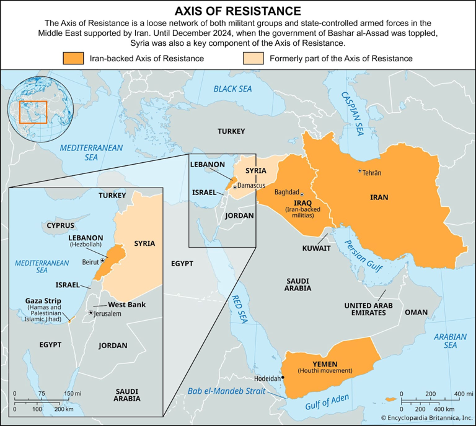
Map illustrating the “Axis of Resistance,” a network of militant groups and state-controlled armed forces in the Middle East supported by Iran.
Syria’s Strategic Loss
The fall of Bashar al-Assad’s regime in December 2024 represents perhaps the most devastating blow to Iran’s regional influence. Syria had served as a crucial corridor for Iranian weapons supplies to Hezbollah and provided Iran with strategic depth in the Levant. The loss of Assad eliminated over a decade of Iranian investment estimated at $30 billion and effectively cut Iran’s connection to its most powerful proxy force.
Hezbollah’s Degradation
Hezbollah, once Iran’s most capable ally, has been severely weakened by Israeli operations in 2024. The group lost much of its leadership, including Hassan Nasrallah, and saw its military infrastructure significantly degraded during the Israel-Hezbollah conflict. Current assessments indicate Hezbollah is “too weak” to provide meaningful assistance to Iran and is instead focused on internal restructuring and rebuilding.
Hezbollah, once Iran’s most capable ally, has been severely weakened by Israeli operations in 2024. The group lost much of its leadership, including Hassan Nasrallah, and saw its military infrastructure significantly degraded during the Israel-Hezbollah conflict. Current assessments indicate Hezbollah is “too weak” to provide meaningful assistance to Iran and is instead focused on internal restructuring and rebuilding.
Regional Proxy Network Elimination
Iran’s broader network of regional militias and proxy forces has been systematically dismantled. The Houthis in Yemen remain the only Iran-backed group still actively engaging Israel, while Iraqi militias have warned they could act only if the United States directly intervenes—a conditional support that highlights their limited commitment.
1. Constraints on Potential Allies
Russia’s Limited Engagement
Despite signing a strategic partnership agreement with Iran in April 2025, Russia has been notably restrained in its support. Russia’s primary focus remains the Ukraine conflict, which consumes most of its military resources and strategic attention. Russian President Vladimir Putin has offered to mediate between Iran and Israel, but this role as potential peacemaker actually prevents Russia from providing military assistance to either side .
Thick black smoke billows over a cityscape, indicating a significant urban incident.
Russian officials have explicitly stated that their partnership with Iran “does not mean the establishment of a military alliance or mutual military assistance”. The European Union has rejected Russia’s mediation offers, noting that Russia has “zero credibility” as an objective mediator given its deepening ties with Iran.
China’s Economic Calculations
China, while maintaining economic ties with Iran through oil purchases and trade, has avoided any military involvement in the current crisis. Chinese officials have limited their response to diplomatic statements expressing “concern” about the conflict and offering to play a “constructive role” in de-escalation. Beijing’s capacity to provide meaningful support is constrained by its inability to effectively manage rapidly evolving crises and its wariness of committing resources during heightened tensions in its own region.
Arab State Neutrality and Opposition
Regional Arab states have largely maintained neutrality or expressed subtle support for Israel’s actions. The G7 nations have explicitly backed Israel’s “right to defend itself” while characterizing Iran as “the principal source of regional instability and terror”. This represents a significant shift in regional dynamics, with traditional Middle Eastern powers either unable or unwilling to assist Iran.
Legal and International Law Complications
The legal framework surrounding the current conflict presents complex challenges that further isolate Iran. While some international legal experts argue that Israel’s preemptive strikes violate international law by not meeting the criteria for legitimate self-defense, Iran’s nuclear program violations complicate any legal arguments in its favor.
Aerial view of what is believed to be the Natanz nuclear facility in Iran, showing areas of significant damage.
Domestic Legitimacy Crisis
Iran’s isolation is compounded by significant domestic opposition to the regime, which limits international sympathy and support. Polling data indicates that 81% of Iran’s adult population opposes the Islamic Republic, with overwhelming support for the protest movements that have challenged the regime. Additionally, 78% of Iranians blame their government’s foreign policy for the country’s economic problems, and 63% believe current policies do not advance ordinary citizens’ wellbeing.
This domestic opposition means that international assistance to the Iranian government would effectively support a regime that lacks legitimacy among its own people, making such support politically untenable for democratic nations.
Economic and Sanctions Constraints
The extensive sanctions regime against Iran, recently reinforced by the Trump administration’s “maximum pressure” campaign, severely constrains any potential international assistance. The sanctions framework makes it extremely difficult for even sympathetic nations to provide meaningful economic or military support without facing secondary sanctions themselves.
Iran’s oil exports have reportedly declined by 94% since the beginning of the Israeli campaign, and the Iranian rial has depreciated significantly, demonstrating the immediate economic impact of the conflict and the limitations on international economic assistance.
Failed Diplomatic Initiatives
Iran’s attempts to secure international mediation have repeatedly failed, highlighting its diplomatic isolation. Despite reaching out to Qatar, Oman, and other traditional mediators, Iran has been unable to secure meaningful international intervention. The scheduled sixth round of US-Iran nuclear negotiations was effectively cancelled following Israel’s attacks, eliminating Iran’s primary diplomatic pathway for resolving the crisis.
Conclusion: The Islamic Republic on the Precipice of Collapse
As Israel’s strategic campaign against Iran’s nuclear infrastructure reaches its culmination, the Islamic Republic stands at a historic crossroads, with mounting evidence suggesting the regime is teetering on the verge of collapse. The systematic degradation of Iran’s military capabilities, the elimination of key leadership figures, and the destruction of critical infrastructure have exposed fundamental weaknesses in the regime’s ability to maintain control. This unprecedented moment of vulnerability creates a window of opportunity for the Iranian people to reclaim their nation from decades of theocratic rule.
The Crumbling Foundations of the Islamic Republic
The Islamic Republic’s foundations have been systematically undermined through a combination of external pressure and internal decay. Israel’s precision strikes have not only degraded Iran’s nuclear program but have strategically targeted the instruments of internal repression that have kept the regime in power. The destruction of Basij headquarters and other security infrastructure has weakened the regime’s ability to suppress domestic dissent at a critical moment.
Recent polling data reveals the depth of the regime’s legitimacy crisis, with an overwhelming 81% of Iranians rejecting the Islamic Republic and only 15% expressing support for the current system. This profound disconnect between the rulers and the ruled has created a volatile situation where the regime’s grip on power depends almost entirely on its capacity for repression rather than any genuine public support.
The IRGC: A Weakened Praetorian Guard
The Islamic Revolutionary Guard Corps (IRGC), once the regime’s most formidable instrument of control, now exhibits significant vulnerabilities that could prove fatal to the Islamic Republic’s survival:
- Leadership Decapitation: The elimination of IRGC Commander-in-Chief Hossein Salami and numerous other senior officers has created a leadership vacuum at the highest levels of Iran’s security apparatus.
- Operational Degradation: Israel’s strikes have severely damaged the IRGC’s missile capabilities and command infrastructure, exposing the organization’s inability to defend the regime against external threats.
- Internal Fractures: Reports indicate growing dissatisfaction within IRGC ranks over economic conditions, corruption among the elite, and the regime’s strategic failures.
- Resource Constraints: Sanctions and economic mismanagement have left many IRGC personnel struggling financially, with commanders reportedly complaining about inadequate salaries that fail to keep pace with inflation.
The Basij militia, the IRGC’s primary tool for suppressing domestic unrest, has demonstrated significant weaknesses in previous confrontations with protesters. During past protest movements, the Basij proved incapable of containing demonstrations without reinforcements from outside provinces, suggesting it may buckle under the pressure of a coordinated nationwide uprising.
The Iranian People’s Moment of Decision
With Israel focused on neutralizing Iran’s nuclear threat, the responsibility for confronting the IRGC and dismantling the apparatus of repression ultimately falls to the Iranian people themselves. The current crisis presents a historic opportunity for Iranians to rise up against a regime that has lost both its legitimacy and much of its capacity for repression.
Recent protests across Iran demonstrate the population’s growing boldness in challenging the regime. In Ilam province, young protesters openly confronted President Masoud Pezeshkian with slogans such as “Death to Khamenei” and “Pezeshkian get lost from Ilam”. These acts of defiance indicate a population increasingly willing to risk confrontation with a weakened security apparatus.
The potential role of external intelligence agencies like Mossad in supporting an Iranian uprising remains speculative but historically significant. Mossad’s demonstrated ability to operate deep within Iranian territory, as evidenced by recent drone operations and sabotage campaigns, suggests the potential for providing tactical support to organized resistance movements.
The Path Forward: Challenges and Opportunities
Despite the regime’s unprecedented vulnerability, several significant obstacles remain to its complete collapse:
- Opposition Fragmentation: Iran’s opposition remains divided among various factions with different visions for the country’s future, including monarchists, republicans, ethnic-based groups, and others.
- Lack of Unified Leadership: No single opposition figure or coalition has emerged with the organizational capacity and broad support needed to coordinate a nationwide uprising.
- Nationalist Backlash: Israeli strikes risk triggering a nationalist response that could temporarily bolster the regime, as Iranians rally against foreign intervention regardless of their views on the Islamic Republic.
- Regime Adaptability: The Islamic Republic has demonstrated remarkable resilience over its 45-year history, surviving previous crises through a combination of repression and limited reforms.
Nevertheless, the convergence of military setbacks, economic collapse, and overwhelming public rejection creates an unprecedented opportunity for change. The Iranian people, with their deep-rooted tradition of resistance and their clear desire for a democratic future, hold the key to finally dismantling the Islamic Republic and its instruments of repression.
Final Assessment
The absence of international rescue for the Islamic Republic of Iran during the June 2025 crisis reflects a perfect storm of factors that have systematically isolated Tehran from potential sources of support. The collapse of Iran’s regional proxy network, constraints on traditional allies like Russia and China, universal condemnation of Iran’s nuclear program, domestic opposition to the regime, and the complex legal dynamics of the conflict have combined to leave Iran facing its greatest existential threat since the 1979 revolution without meaningful international assistance.
Urban destruction and emergency response in a city affected by conflict, showing damaged buildings and rescue efforts.
Iran’s current predicament demonstrates how decades of regional destabilization, nuclear proliferation, and authoritarian governance have ultimately backfired, leaving the Islamic Republic isolated precisely when it most needs international support. The regime’s strategy of projecting power through proxies and nuclear threats has collapsed under pressure from a more capable adversary, while its domestic illegitimacy and international legal violations have eliminated potential sources of rescue from the global community.
This isolation appears likely to continue as long as Iran maintains its current nuclear trajectory and regional policies, leaving the Islamic Republic to face its current crisis largely alone despite its desperate appeals for international intervention.
The Islamic Republic of Iran stands at its most vulnerable moment since the 1979 revolution. With its nuclear program severely damaged, its military leadership decimated, and its instruments of repression weakened, the regime faces existential challenges from both within and without.
While Israel’s military campaign has created this moment of opportunity, the final chapter in the Islamic Republic’s story will ultimately be written by the Iranian people themselves. Their willingness to confront the IRGC and other security forces, potentially with limited external support, will determine whether this moment of crisis leads to genuine transformation or another missed opportunity for liberation.
The coming months will likely determine whether the Iranian people can seize this historic moment to reclaim their nation from a regime that has lost all legitimacy and stands on the verge of collapse. The world now watches as Iranians face their moment of decision – to rise up against their weakened oppressors or to allow the Islamic Republic to survive its greatest crisis yet.
Sources
https://www.nbcnews.com/world/iran/will-israels-airstrikes-cause-collapse-iranian-regime-rcna213401
https://engelsbergideas.com/notebook/how-irans-grand-strategy-collapsed/
https://www.ispionline.it/en/publication/country-to-watch-2025-iran-195462
https://www.economist.com/middle-east-and-africa/2025/06/16/will-irans-hated-regime-implode
https://nolabels.org/the-latest/irans-opposition-is-growing-but-divided/
https://en.wikipedia.org/wiki/Mahsa_Amini_protests
https://www.cfr.org/backgrounder/irans-revolutionary-guards
https://en.wikipedia.org/wiki/Islamic_Revolutionary_Guard_Corps
https://en.wikipedia.org/wiki/June_2025_Mossad_operations_in_Iran
https://understandingwar.org/backgrounder/iran-update-special-report-june-14-2025-morning-edition
https://www.aei.org/articles/the-basij-resistance-force/
https://www.brandeis.edu/crown/publications/middle-east-briefs/meb160.html
https://www.newsweek.com/iran-prince-reza-2087258
https://www.cnn.com/2025/06/16/middleeast/israel-operation-iran-regime-change-netanyahu-intl
https://www.cnn.com/2025/06/19/world/video/iran-history-protest-ldn-intldsk
https://en.wikipedia.org/wiki/June_2025_Israeli_strikes_on_Iran
https://www.reuters.com/world/middle-east/un-security-council-meet-iran-friday-2025-06-13/
https://www.newsweek.com/iran-calls-un-halt-israels-attacks-stop-trump-joining-war-2087523
https://www.securitycouncilreport.org/whatsinblue/2025/06/iran-emergency-meeting.php
https://www.cnn.com/2025/06/13/middleeast/iran-nuclear-program-explainer-intl-dg
https://www.bbc.com/news/articles/ce3v6w2qr12o
https://en.wikipedia.org/wiki/2025_United_States–Iran_negotiations
https://en.wikipedia.org/wiki/Fall_of_the_Assad_regime
https://carnegieendowment.org/middle-east/diwan/2024/12/why-did-iran-allow-assads-downfall?lang=en
https://tcf.org/content/report/the-axis-of-resistance-returns-to-its-local-roots/
https://en.wikipedia.org/wiki/Axis_of_Resistance
https://www.dw.com/en/how-could-the-fall-of-syrias-assad-impact-iran/a-71001933
https://www.cbsnews.com/news/how-hezbollah-losses-have-weakened-iran-power-influence-60-minutes/
https://www.dw.com/en/lebanon-hezbollahs-armed-wing-lingers-at-a-crossroads/a-72895394
https://www.newarab.com/news/one-one-irans-allies-fall-silent-israels-new-war
https://www.aljazeera.com/news/2025/6/17/how-will-russia-respond-to-the-israel-iran-conflict
https://www.dw.com/en/israel-iran-attack-legality-international-law/a-72952324
https://www.usip.org/publications/2025/02/current-situation-iran
https://www.state.gov/iran-sanctions/
https://www.congress.gov/bill/119th-congress/house-bill/1800